
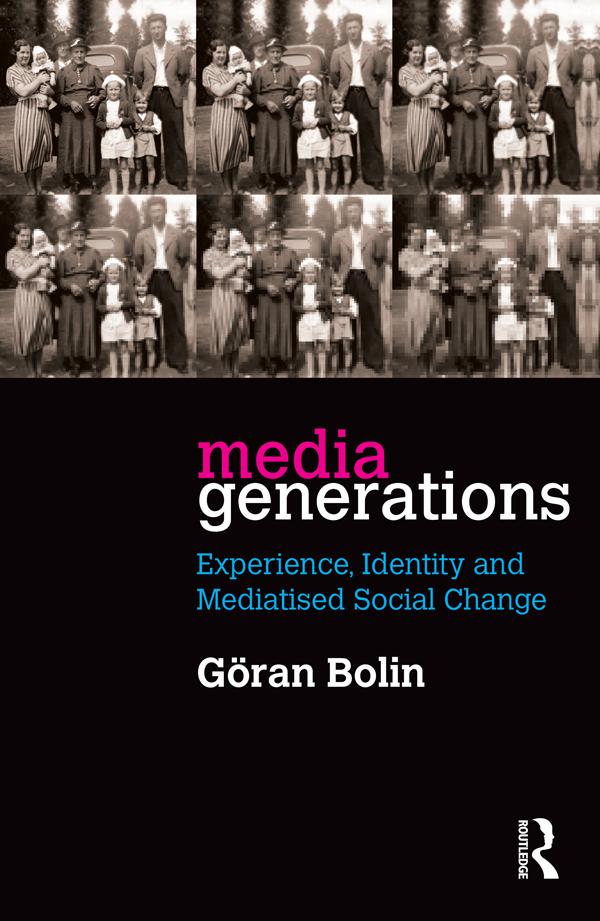
While the analysis of generations has been central in the sociological understanding of social change, the role of the media in this process has only been acknowledged as an important feature during the last couple of decades. Building on quantitative and qualitative comparative research, Media Generations analyses the role of the media in the formation of generational experience, identity and habitus, and how mediated nostalgia is an important part in the social formation of generations.
Avoiding popular generational labelling Göran Bolin argues that the totality of the media landscape is a contextual structure that together with age and life-course factors help inform world-views and ways to relate to the wider society that guide the actions of media users. Media Generations demonstrates how - as different generations come of age at different moments in the mediatised historical process - they develop different media habits, but also make sense of the world differently, which informs their relations to older and younger generations.
It also explores how this process of ‘generationing’, that is, the process in which a generation come into being as a self-perceived social identity, partly builds on specific kinds of nostalgia that establishes generational differences and distinctions. This book will be of special interest to those studying social change, collective memory, cultural identity and the role of the media in social experience.
Betal nemt med kort, Klarna, Apple Pay eller Google Pay. Ikke tilfreds? Du har altid 14 dages fortrydelsesret. Læs mere i vores vilkår. Har du spørgsmål, så send os en mail på hello@memmo.org.
Memmo gør det nemmere at studere – uanset hvor du er i verden. Hos os samler du dine kursusbøger og smarte studieværktøjer ét sted: resuméer, quizzer, podcasts og flashcards. Og så er der Ted, din studieven, der svarer på alt, du undrer dig over. Over 50 000 studerende studerer allerede her – bygget til at hjælpe dig med at lære hurtigere og stresse mindre.