
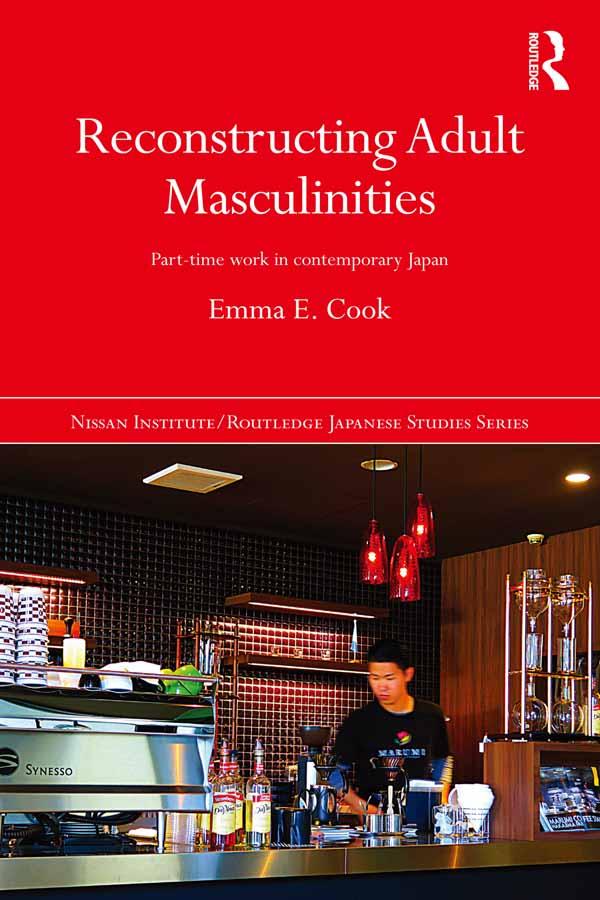
Over the past two decades, Japan’s socioeconomic environment has undergone considerable changes prompted by both a long recession and the relaxation of particular labour laws in the 1990s and 2000s. Within this context, "freeters", part-time workers aged between fifteen and thirty-four who are not housewives or students, emerged into the public arena as a social problem.
This book, drawing on six years of ethnographic research, takes the lives of male freeters as a lens to examine contemporary ideas and experiences of adult masculinities. It queries how notions of adulthood and masculinity are interwoven and how these ideals are changing in the face of large-scale employment shifts. Highlighting the continuing importance of productivity and labour in understandings of masculinities, it argues that men experience and practice multiple masculinities which are often contradictory, sometimes limiting, and change as they age and in interaction with others, and with social structures, institutions, and expectations.
Providing a fascinating alternative to the stereotypical idea of the Japanese male as a salaryman, this book will be of huge interest to students and scholars of Japanese culture and society, social and cultural anthropology, gender and men's studies.
Betal nemt med kort, Klarna, Apple Pay eller Google Pay. Ikke tilfreds? Du har altid 14 dages fortrydelsesret. Læs mere i vores vilkår. Har du spørgsmål, så send os en mail på hello@memmo.org.
Memmo gør det nemmere at studere – uanset hvor du er i verden. Hos os samler du dine kursusbøger og smarte studieværktøjer ét sted: resuméer, quizzer, podcasts og flashcards. Og så er der Ted, din studieven, der svarer på alt, du undrer dig over. Over 50 000 studerende studerer allerede her – bygget til at hjælpe dig med at lære hurtigere og stresse mindre.