
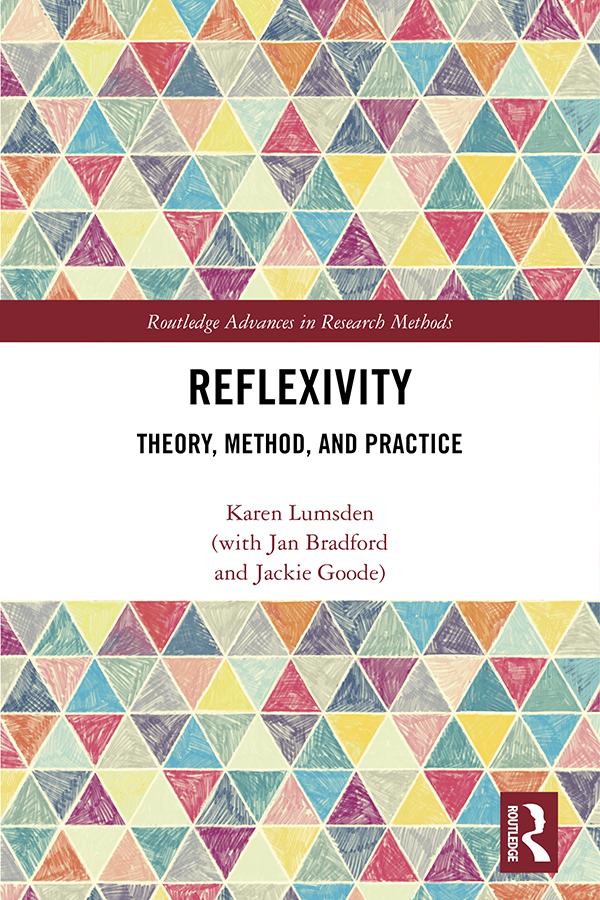
Reflexivity is valuable in social research because it draws attention to the researcher as part of the world being studied and reminds us that the individuals involved in our research are subjects, not objects. By being reflexive we acknowledge that we cannot be separated from our biographies.
This volume reviews key debates concerning reflexivity in theory, methods, and practice. It mounts a defence of reflexivity against new materialist and post-qualitative critiques and the pressures exerted on scholars from the neoliberal marketized university system which privileges fast academia at the expense of slow, reflective scholarship. While defending reflexivity, this book also those identifies issues which plague mainstream sociological operationalizations of a positivistic form of reflexivity. It argues for the extension of reflexivity into domains otherwise neglected in public accounts, and a shift from reflexivity as an individualized quality of the researcher (used to judge peers and navel-gaze) to a feminist, collaborative, reflexive sensibility which is mindful of the wider contexts shaping the construction of knowledge(s), experience(s), and of the role of research communities.
Providing examples of reflexivity in action from academics at different stages of their careers, Reflexivity will appeal to students and researchers interested in fields such as Sociology, Qualitative Research Methods, Criminology, Ethnography, and Ethics of Research.
Betal nemt med kort, Klarna, Apple Pay eller Google Pay. Ikke tilfreds? Du har altid 14 dages fortrydelsesret. Læs mere i vores vilkår. Har du spørgsmål, så send os en mail på hello@memmo.org.
Memmo gør det nemmere at studere – uanset hvor du er i verden. Hos os samler du dine kursusbøger og smarte studieværktøjer ét sted: resuméer, quizzer, podcasts og flashcards. Og så er der Ted, din studieven, der svarer på alt, du undrer dig over. Over 50 000 studerende studerer allerede her – bygget til at hjælpe dig med at lære hurtigere og stresse mindre.