
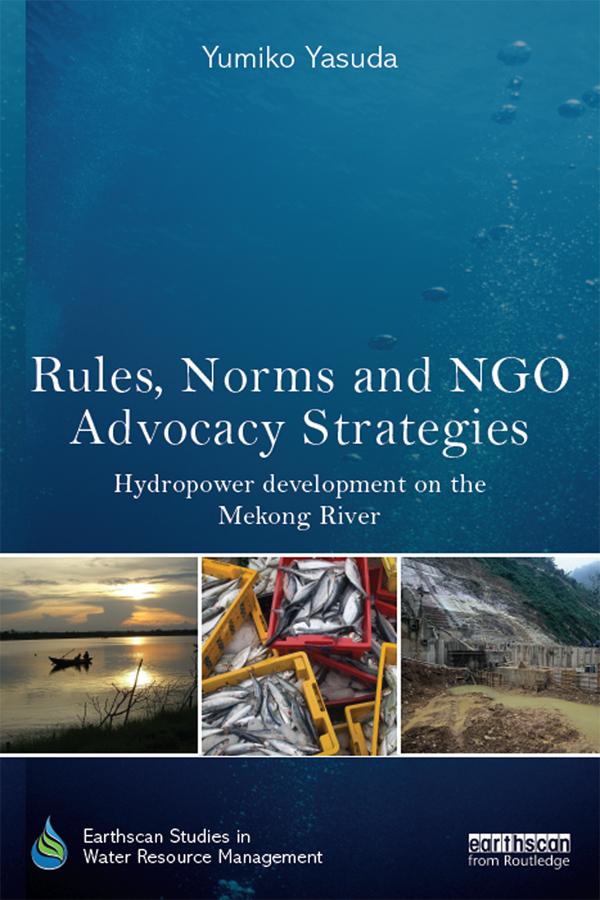
There is much controversy over the development of new dams for hydropower, where concerns for environmental protection and the livelihoods of local people may conflict with the goals of economic development. This book analyses the opportunities and barriers that NGOs and civil society actors face when conducting advocacy campaigns against such developments.
Through a comparison of two NGO coalitions in Cambodia and Vietnam advocating against the Xayaburi hydropower dam on the Mekong River, the book explores the intricate interactions of formal and informal rules and norms and how they influence advocacy strategies. A framework for analysis is proposed which serves as a tool for analysis by civil society actors. The author generates fresh insights into the way in which opportunities and barriers are created for NGOs to influence state-centric decision-making processes.
The book also discusses Mekong riparian states’ negotiation process over the Xayaburi hydropower dam in detail, providing an analysis of the Mekong River’s governance under the 1995 Mekong Agreement. The book concludes by suggesting ways to improve the engagement of civil society actors in the governance of transboundary rivers and development projects.
Betal nemt med kort, Klarna, Apple Pay eller Google Pay. Ikke tilfreds? Du har altid 14 dages fortrydelsesret. Læs mere i vores vilkår. Har du spørgsmål, så send os en mail på hello@memmo.org.
Memmo gør det nemmere at studere – uanset hvor du er i verden. Hos os samler du dine kursusbøger og smarte studieværktøjer ét sted: resuméer, quizzer, podcasts og flashcards. Og så er der Ted, din studieven, der svarer på alt, du undrer dig over. Over 50 000 studerende studerer allerede her – bygget til at hjælpe dig med at lære hurtigere og stresse mindre.