
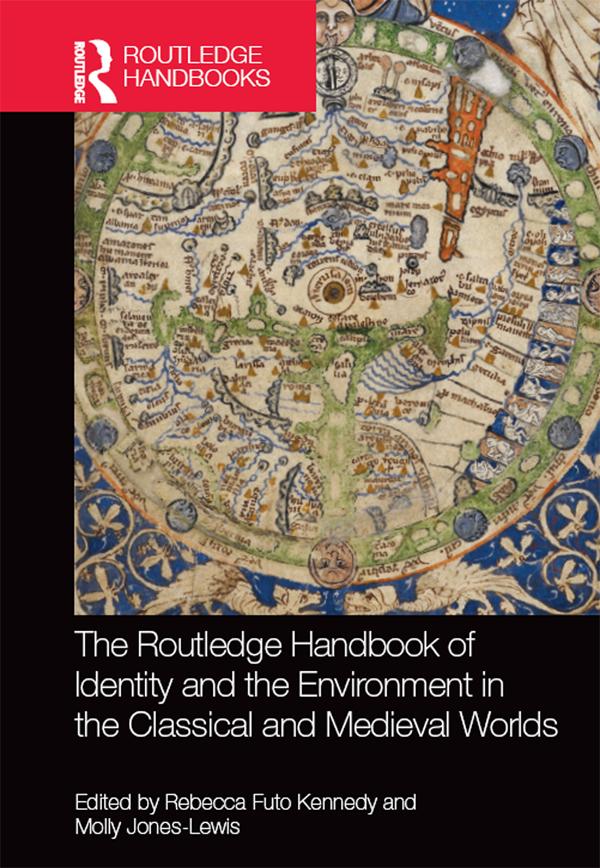
The Routledge Handbook of Identity and the Environment in the Classical and Medieval Worlds explores how environment was thought to shape ethnicity and identity, discussing developments in early natural philosophy and historical ethnographies. Defining ‘environment’ broadly to include not only physical but also cultural environments, natural and constructed, the volume considers the multifarious ways in which environment was understood to shape the culture and physical characteristics of peoples, as well as how the ancients manipulated their environments to achieve a desired identity. This diverse collection includes studies not only of the Greco-Roman world, but also ancient China and the European, Jewish and Arab inheritors and transmitters of classical thought.
In recent years, work in this subject has been confined mostly to the discussion of texts that reflect an approach to the barbarian as ‘other’. The Routledge Handbook of Identity and the Environment in the Classical and Medieval Worlds takes the discussion of ethnicity on a fresh course, contextualising the concept of the barbarian within rational discourses such as cartography, medicine, and mathematical sciences, an approach that allows us to more clearly discern the varied and nuanced approaches to ethnic identity which abounded in antiquity. The innovative and thought-provoking material in this volume realises new directions in the study of identity in the Classical and Medieval worlds.
Betal nemt med kort, Klarna, Apple Pay eller Google Pay. Ikke tilfreds? Du har altid 14 dages fortrydelsesret. Læs mere i vores vilkår. Har du spørgsmål, så send os en mail på hello@memmo.org.
Memmo gør det nemmere at studere – uanset hvor du er i verden. Hos os samler du dine kursusbøger og smarte studieværktøjer ét sted: resuméer, quizzer, podcasts og flashcards. Og så er der Ted, din studieven, der svarer på alt, du undrer dig over. Over 50 000 studerende studerer allerede her – bygget til at hjælpe dig med at lære hurtigere og stresse mindre.