
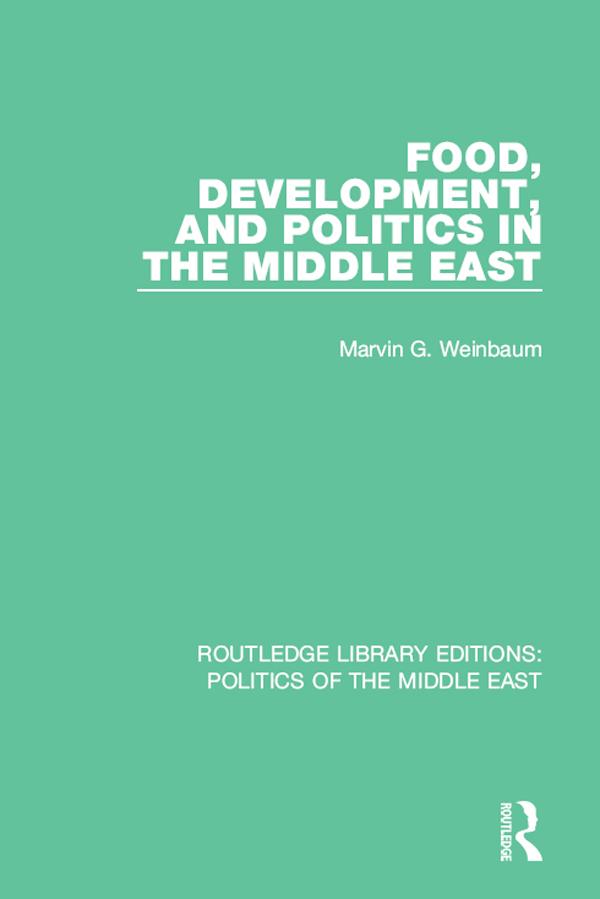
As the reality of a food deficit emerged in the Middle East, rural society and the agricultural sector – once viewed as peripheral to national development – swiftly rose up the policy agendas of nearly every Middle East country. This book, first published in 1982, looks at the complex interrelationships of food production, development schemes and politics in those countries. Dr Weinbaum considers the origins, nature, scope and political dimensions of the potential food shortfall and explores how food deficits could lead to changed international relations among states in the Middle East. He specifically examines the physical and technological limitations to increased food production, then assesses the major social, economic and political hurdles in the way of agricultural development, the effects of – and pressures for – agrarian reform, the bureaucratic policymaking process, and the domestic impact of foreign assistance policies. He concludes with an examination of the linkage between food supply availability and political stability.
Betal nemt med kort, Klarna, Apple Pay eller Google Pay. Ikke tilfreds? Du har altid 14 dages fortrydelsesret. Læs mere i vores vilkår. Har du spørgsmål, så send os en mail på hello@memmo.org.
Memmo gør det nemmere at studere – uanset hvor du er i verden. Hos os samler du dine kursusbøger og smarte studieværktøjer ét sted: resuméer, quizzer, podcasts og flashcards. Og så er der Ted, din studieven, der svarer på alt, du undrer dig over. Over 50 000 studerende studerer allerede her – bygget til at hjælpe dig med at lære hurtigere og stresse mindre.