
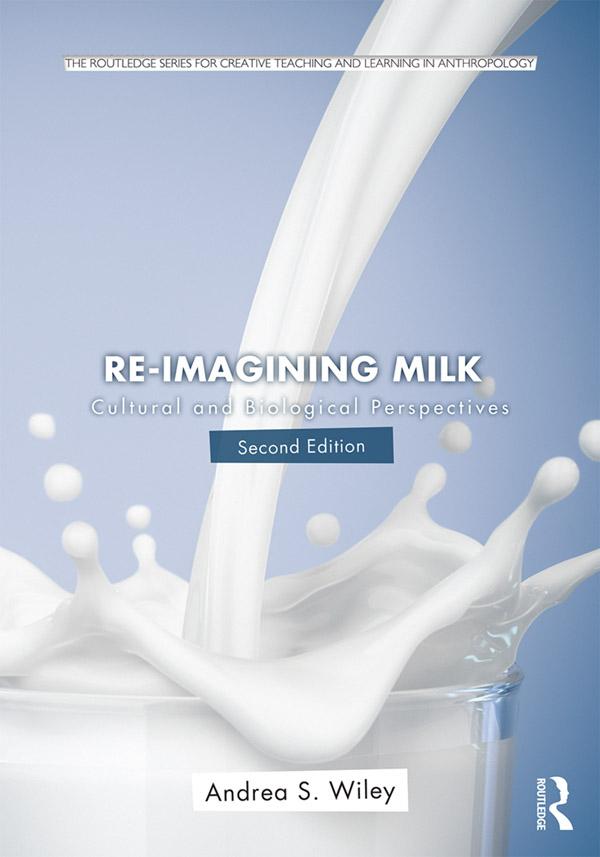
Milk is a fascinating food: it is produced by mothers of each mammalian species for consumption by nursing infants of that species, yet many humans drink the milk of another species (mostly cows) and they drink it throughout life. Thus we might expect that this dietary practice has some effects on human biology that are different from other foods. In Re-imagining Milk Wiley considers these, but also puts milk-drinking into a broader historical and cross-cultural context. In particular, she asks how dietary policies promoting milk came into being in the U.S., how they intersect with biological variation in milk digestion, how milk consumption is related to child growth, and how milk is currently undergoing globalizing processes that contribute to its status as a normative food for children (using India and China as examples). Wiley challenges the reader to re-evaluate their assumptions about cows' milk as a food for humans. Informed by both biological and social theory and data, Re-imagining Milk provides a biocultural analysis of this complex food and illustrates how a focus on a single commodity can illuminate aspects of human biology and culture.
Betal nemt med kort, Klarna, Apple Pay eller Google Pay. Ikke tilfreds? Du har altid 14 dages fortrydelsesret. Læs mere i vores vilkår. Har du spørgsmål, så send os en mail på hello@memmo.org.
Memmo gør det nemmere at studere – uanset hvor du er i verden. Hos os samler du dine kursusbøger og smarte studieværktøjer ét sted: resuméer, quizzer, podcasts og flashcards. Og så er der Ted, din studieven, der svarer på alt, du undrer dig over. Over 50 000 studerende studerer allerede her – bygget til at hjælpe dig med at lære hurtigere og stresse mindre.