
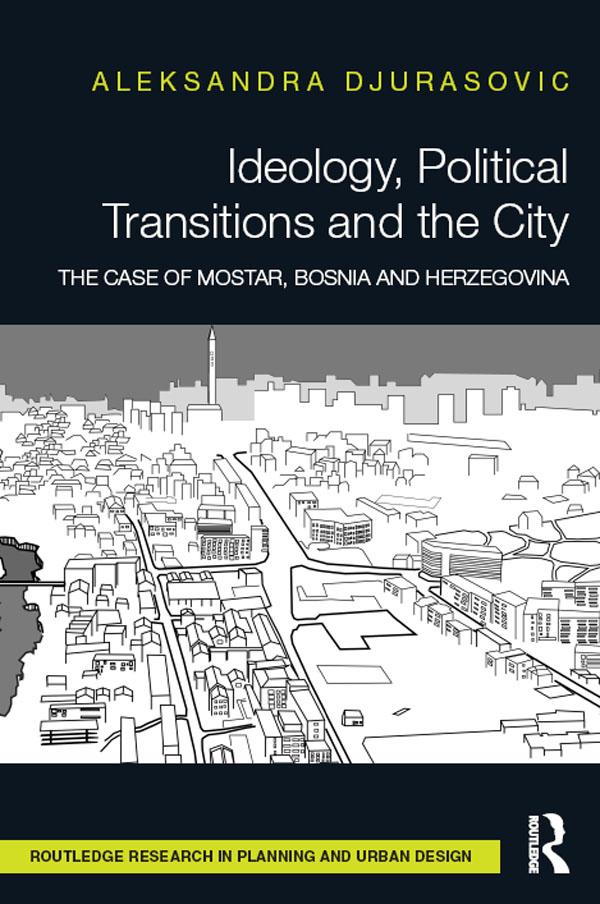
Recent history has seen Bosnian and Herzegovinian (BiH) cities undergoing several transitions. Their cities have developed under socialism (1945 – 1992), have suffered through the civil war during the 1990s, and during the last twenty years have been undergoing a slow and multifaceted transition to an indeterminate end point.
Focusing on the post-socialist, postwar, and neoliberal transitions experienced in BiH, the book shows that planning systems deviated from control-oriented and top-down regulation to flexible approaches for more open for informal development. The book analyzes several levels of planning-related processes: the former Yugoslavia, BiH, the city of Mostar, and three urban zones (the Industrial Zone Bišće Polje, the City Zone Rondo, and the Historic District and the Old Town Zone) in order to offer insights into the new planning systems in the late phase of post-socialist transition.
Betal nemt med kort, Klarna, Apple Pay eller Google Pay. Ikke tilfreds? Du har altid 14 dages fortrydelsesret. Læs mere i vores vilkår. Har du spørgsmål, så send os en mail på hello@memmo.org.
Memmo gør det nemmere at studere – uanset hvor du er i verden. Hos os samler du dine kursusbøger og smarte studieværktøjer ét sted: resuméer, quizzer, podcasts og flashcards. Og så er der Ted, din studieven, der svarer på alt, du undrer dig over. Over 50 000 studerende studerer allerede her – bygget til at hjælpe dig med at lære hurtigere og stresse mindre.