
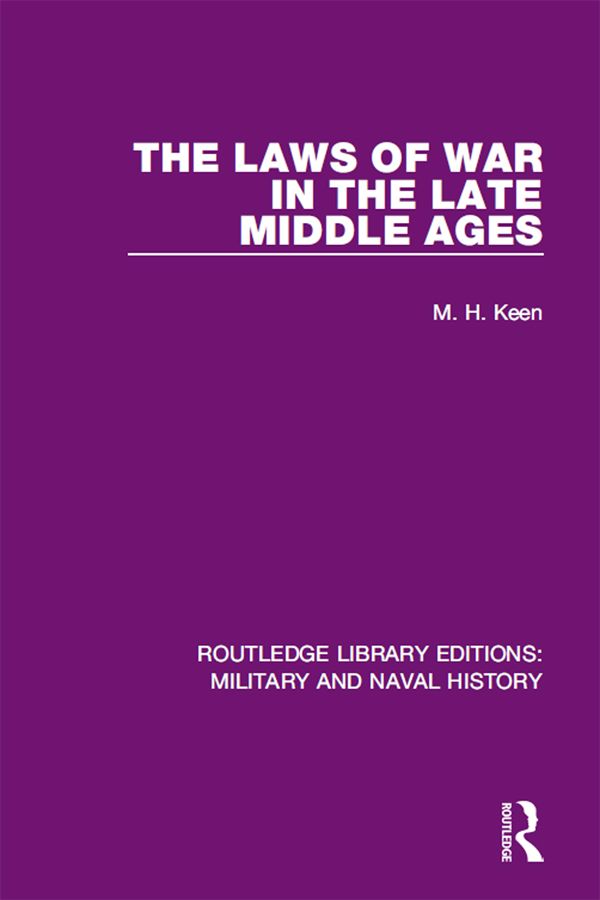
Many of the combatants in the European wars of the late middle ages fought for their own gain, but they observed a code of regulations, part chivalrous and part commercial which they called the ‘law of arms’. This book, originally published in 1965, examines this soldiers’ code, to understand its rules and how they were enforced. How did a soldier sue for ransom money if his prisoner would not pay it, and before what court? How did he know whether what he took by force was lawful spoil? As the answers to these and other questions reveal, the workings of the law of arms gave practical point to the contemporary cult of chivalry. It also had an important influence on the early development of ideas of international law.
Betal nemt med kort, Klarna, Apple Pay eller Google Pay. Ikke tilfreds? Du har altid 14 dages fortrydelsesret. Læs mere i vores vilkår. Har du spørgsmål, så send os en mail på hello@memmo.org.
Memmo gør det nemmere at studere – uanset hvor du er i verden. Hos os samler du dine kursusbøger og smarte studieværktøjer ét sted: resuméer, quizzer, podcasts og flashcards. Og så er der Ted, din studieven, der svarer på alt, du undrer dig over. Over 50 000 studerende studerer allerede her – bygget til at hjælpe dig med at lære hurtigere og stresse mindre.