
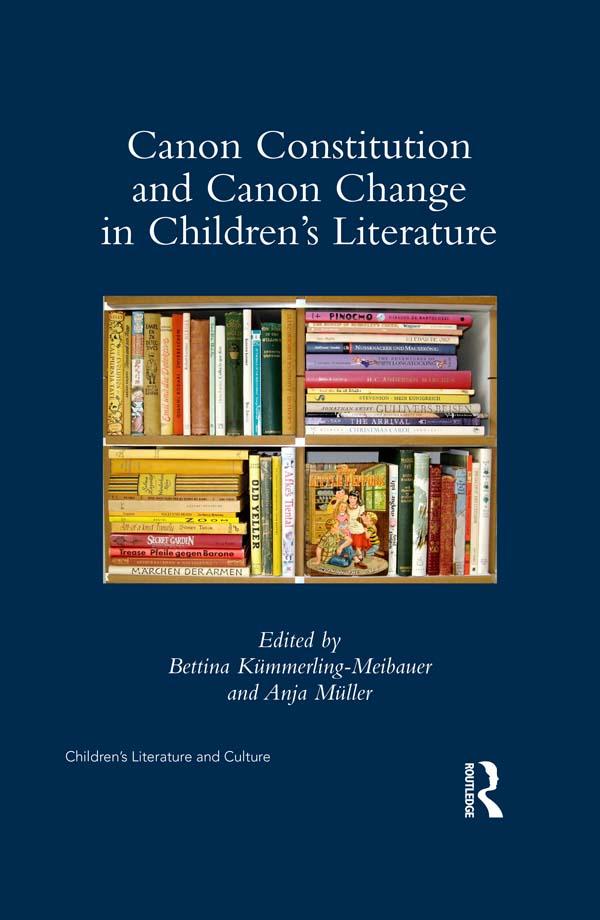
This volume focuses on the (de)canonization processes in children’s literature, considering the construction and cultural-historical changes of canons in different children’s literatures. Chapters by international experts in the field explore a wide range of different children’s literatures from Great Britain, Germany, Scandinavia, the Low Countries, Eastern and Central Europe, as well as from Non-European countries such as Australia, Israel, and the United States. Situating the inquiry within larger literary and cultural studies conversations about canonicity, the contributors assess representative authors and works that have encountered changing fates in the course of canon history. Particular emphasis is given to sociological canon theories, which have so far been under-represented in canon research in children’s literature. The volume therefore relates historical changes in the canon of children’s literature not only to historical changes in concepts of childhood but to more encompassing political, social, economic, cultural, and ideological shifts. This volume’s comparative approach takes cognizance of the fact that, if canon formation is an important cultural factor in nation-building processes, a comparative study is essential to assessing transnational processes in canon formation. This book thus renders evident the structural similarities between patterns and strategies of canon formation emerging in different children’s literatures.
Betal nemt med kort, Klarna, Apple Pay eller Google Pay. Ikke tilfreds? Du har altid 14 dages fortrydelsesret. Læs mere i vores vilkår. Har du spørgsmål, så send os en mail på hello@memmo.org.
Memmo gør det nemmere at studere – uanset hvor du er i verden. Hos os samler du dine kursusbøger og smarte studieværktøjer ét sted: resuméer, quizzer, podcasts og flashcards. Og så er der Ted, din studieven, der svarer på alt, du undrer dig over. Over 50 000 studerende studerer allerede her – bygget til at hjælpe dig med at lære hurtigere og stresse mindre.