
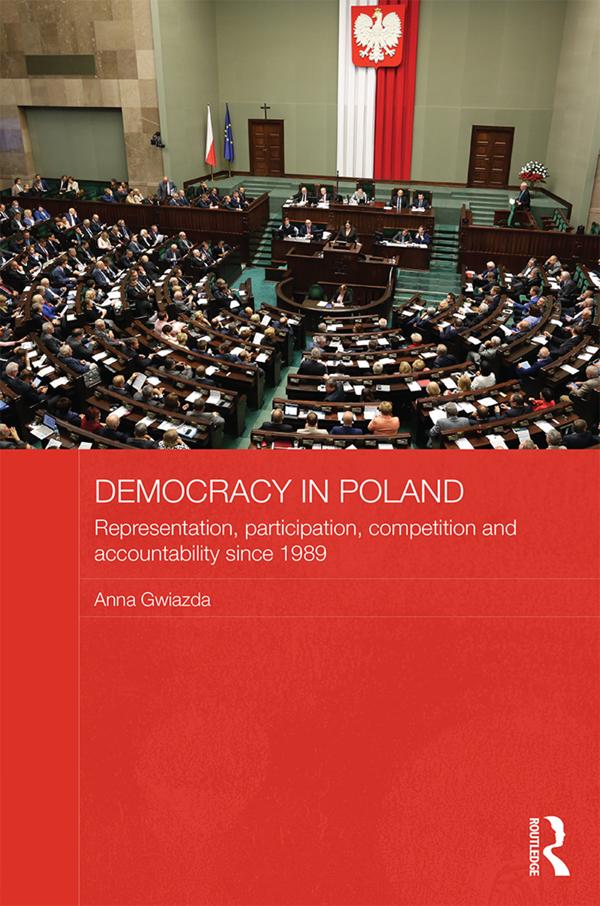
This book assesses the quality of democracy in Poland from the collapse of communism in 1989 up to the 2011 parliamentary election. It presents an in-depth, empirically grounded study comparing two decades of democratic politics. Drawing on democratic theory and comparative politics, the book puts forward an evaluation of democracy based on four dimensions: representation, participation, competition and accountability. The book is an important contribution to debates on the performance of the new democracies in Central and Eastern Europe, where some scholars argue that there is a ‘democratic crisis’, that, after a period of democratic progress, most of these countries are experiencing democratic fatigue and that their democratic performance is poor. However, the Polish case shows that democracy is not in crisis - in fact, the quality of democracy in Poland has improved. The book shows that democratic quality stems from good democratic institutions. Moreover, the Polish case shows useful lessons that can be learnt by democratic reformers in countries that are undergoing the transition to democracy or are aiming to consolidate their democratic systems. It concludes that effective accountability, good representation and stable competition are vital.
Betal nemt med kort, Klarna, Apple Pay eller Google Pay. Ikke tilfreds? Du har altid 14 dages fortrydelsesret. Læs mere i vores vilkår. Har du spørgsmål, så send os en mail på hello@memmo.org.
Memmo gør det nemmere at studere – uanset hvor du er i verden. Hos os samler du dine kursusbøger og smarte studieværktøjer ét sted: resuméer, quizzer, podcasts og flashcards. Og så er der Ted, din studieven, der svarer på alt, du undrer dig over. Over 50 000 studerende studerer allerede her – bygget til at hjælpe dig med at lære hurtigere og stresse mindre.