
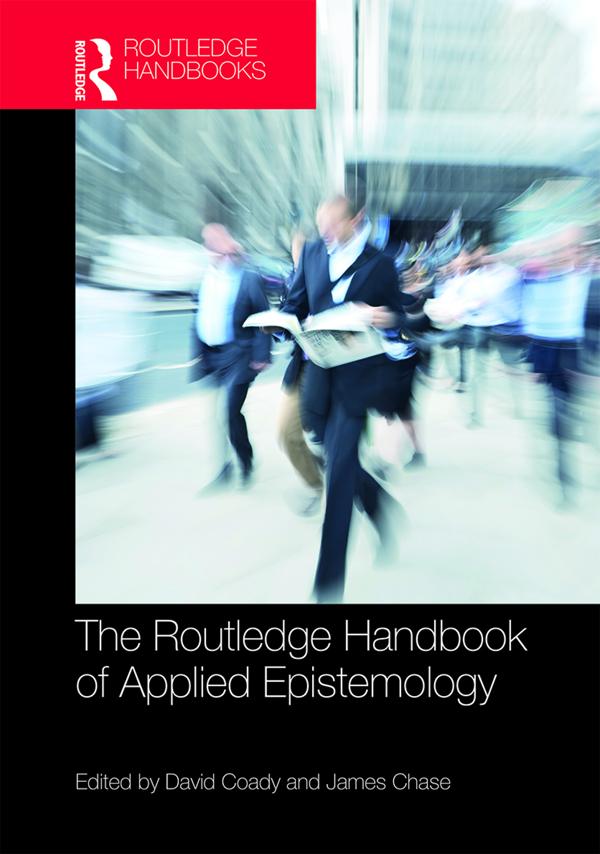
While applied epistemology has been neglected for much of the twentieth century, it has seen emerging interest in recent years, with key thinkers in the field helping to put it on the philosophical map. Although it is an old tradition, current technological and social developments have dramatically changed both the questions it faces and the methodology required to answer those questions. Recent developments also make it a particularly important and exciting area for research and teaching in the twenty-first century. The Routledge Handbook of Applied Epistemology is an outstanding reference source to this exciting subject and the first collection of its kind. Comprising entries by a team of international contributors, the Handbook is divided into six main parts:
- The Internet
- Politics
- Science
- Epistemic institutions
- Individual investigators
- Theory and practice in philosophy.
Within these sections, the core topics and debates are presented, analyzed, and set into broader historical and disciplinary contexts. The central topics covered include: the prehistory of applied epistemology, expertise and scientific authority, epistemic aspects of political and social philosophy, epistemology and the law, and epistemology and medicine.
Essential reading for students and researchers in epistemology, political philosophy, and applied ethics the Handbook will also be very useful for those in related fields, such as law, sociology, and politics.
Betal nemt med kort, Klarna, Apple Pay eller Google Pay. Ikke tilfreds? Du har altid 14 dages fortrydelsesret. Læs mere i vores vilkår. Har du spørgsmål, så send os en mail på hello@memmo.org.
Memmo gør det nemmere at studere – uanset hvor du er i verden. Hos os samler du dine kursusbøger og smarte studieværktøjer ét sted: resuméer, quizzer, podcasts og flashcards. Og så er der Ted, din studieven, der svarer på alt, du undrer dig over. Over 50 000 studerende studerer allerede her – bygget til at hjælpe dig med at lære hurtigere og stresse mindre.