
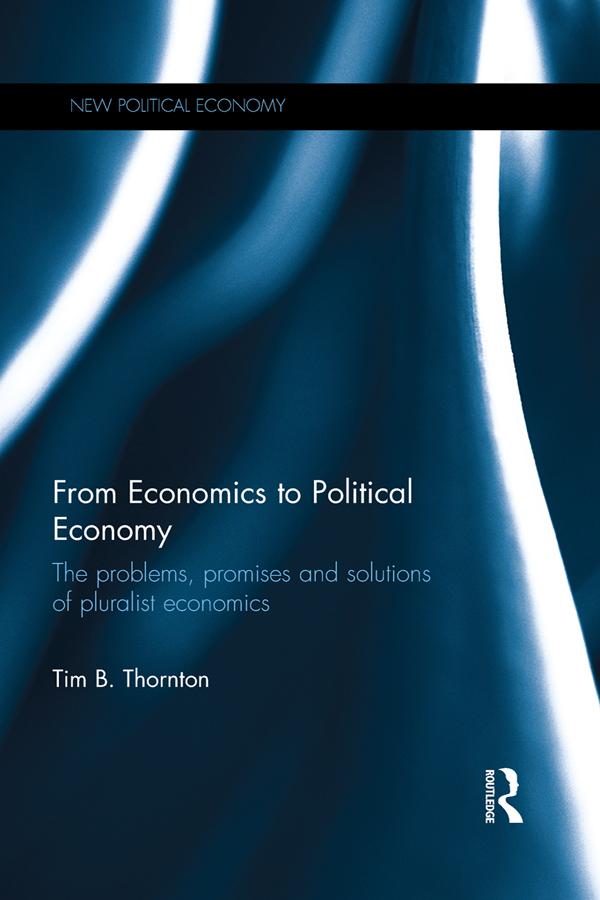
The discipline of economics has been increasingly criticized for its inability to illuminate the workings of the real world and to provide reliable policy guidance for the major economic and social challenges of our time.
A central problem in contemporary economics, and a problem from which many of its other failings flow, is its lack of plurality. By a lack of plurality it is meant that contemporary economics lacks diversity in its methods, theories, epistemology and methodology. It is also meant that economics has become far less interdisciplinary. From Economics to Political Economy offers an explanation as to why economics has become so determinedly non-pluralistic, and also gives considerable attention to exploring and evaluating promising strategies for reform. These strategies include developing a pluralist economics under the label of ‘political economy’ within other social science departments (such as departments of politics). Along the way the reader will learn about the worldwide student movement seeking greater pluralism in economics, encounter some dramatic case studies in intellectual suppression, gain a fuller sense of the nature of contemporary economics and explore the relationship between economics and other social sciences.
This book is of interest to any social scientist, particularly those with interests in economics and politics.
Betal nemt med kort, Klarna, Apple Pay eller Google Pay. Ikke tilfreds? Du har altid 14 dages fortrydelsesret. Læs mere i vores vilkår. Har du spørgsmål, så send os en mail på hello@memmo.org.
Memmo gør det nemmere at studere – uanset hvor du er i verden. Hos os samler du dine kursusbøger og smarte studieværktøjer ét sted: resuméer, quizzer, podcasts og flashcards. Og så er der Ted, din studieven, der svarer på alt, du undrer dig over. Over 50 000 studerende studerer allerede her – bygget til at hjælpe dig med at lære hurtigere og stresse mindre.