
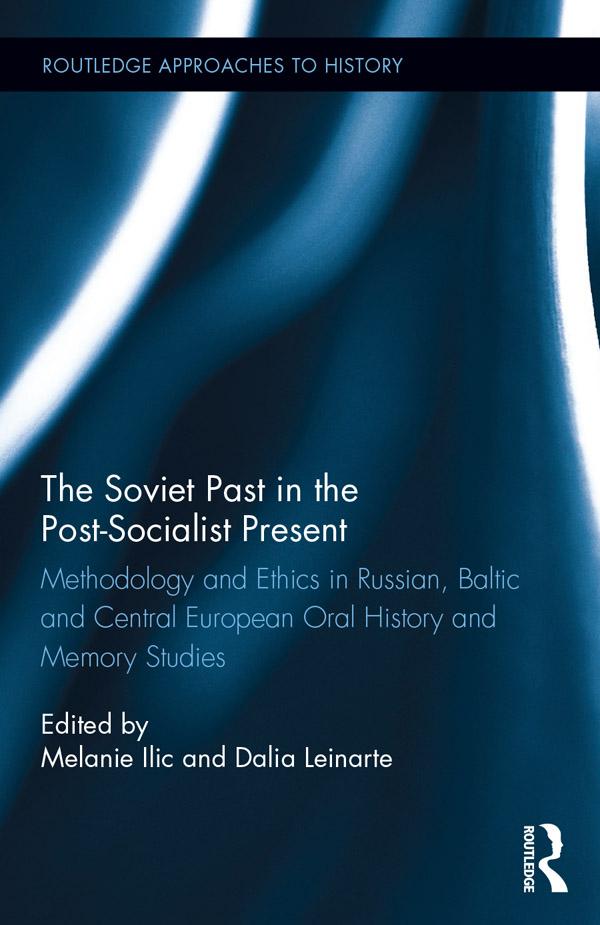
This collection examines practical and ethical issues inherent in the application of oral history and memory studies to research about the Soviet Union and Eastern Europe since the collapse of the Soviet bloc. Case studies highlight the importance of ethical good practice, including the reflexive interrogation of the interviewer and researcher, and aspects of gender and national identity.
Researchers use oral history to analyze present-day recollections of the Soviet past, thereby extending our understanding beyond archival records, official rhetoric and popular mythology. Oral history explores individual life stories, but this has sometimes resulted in rather incomplete, incoherent, inconsistent or illogical narratives. Oral history, therefore, presents the researcher with a number of methodological and ethical dilemmas, including the interpretation of "silence" in biographical accounts.
This collection links the discussion of oral history ethics with that of memory studies. Memories are shaped by factors that may be, simultaneously, both consecutive and disrupted. In written accounts and responses to interview questions, respondents sometimes display nostalgia for the Soviet past, or, conversely, may seek to de-mythologize the realities of Soviet rule. Case studies explore what to do when interview subjects and memoirists consciously, sub-consciously or unconsciously "forget" aspects of their own past, or themselves seek to take control of the research process.
Betal nemt med kort, Klarna, Apple Pay eller Google Pay. Ikke tilfreds? Du har altid 14 dages fortrydelsesret. Læs mere i vores vilkår. Har du spørgsmål, så send os en mail på hello@memmo.org.
Memmo gør det nemmere at studere – uanset hvor du er i verden. Hos os samler du dine kursusbøger og smarte studieværktøjer ét sted: resuméer, quizzer, podcasts og flashcards. Og så er der Ted, din studieven, der svarer på alt, du undrer dig over. Over 50 000 studerende studerer allerede her – bygget til at hjælpe dig med at lære hurtigere og stresse mindre.