
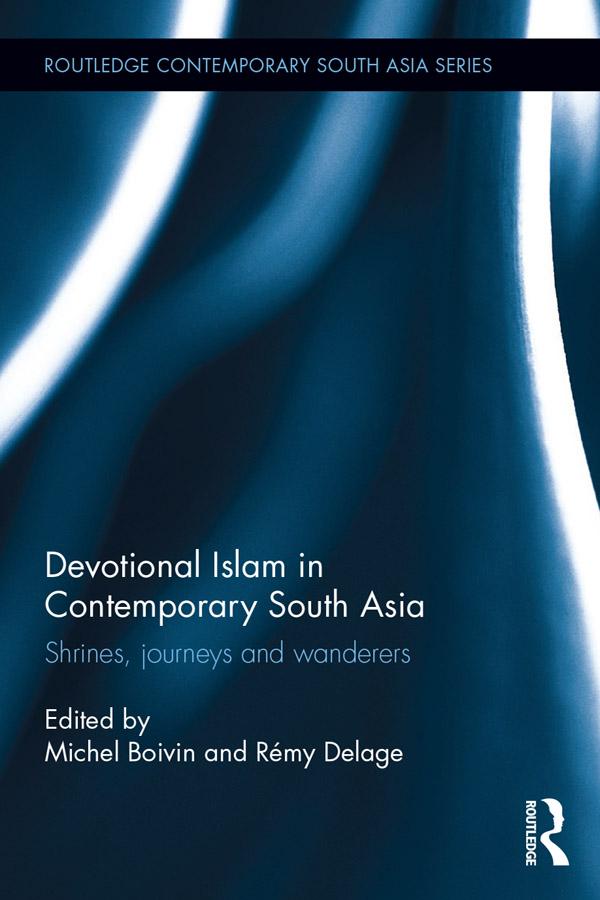
The Muslim shrine is at the crossroad of many processes involving society and culture. It is the place where a saint – often a Sufi - is buried, and it works as a main social factor, with the power of integrating or rejecting people and groups, and as a mirror reflecting the intricacies of a society.
The book discusses the role of popular Islam in structuring individual and collective identities in contemporary South Asia. It identifies similarities and differences between the worship of saints and the pattern of religious attendance to tombs and mausoleums in South Asian Sufism and Shi`ism. Inspired by new advances in the field of ritual and pilgrimage studies, the book demonstrates that religious gatherings are spaces of negotiation and redefinitions of religious identity and of the notion of sainthood. Drawing from a large corpus of vernacular and colonial sources, as well as the register of popular literature and ethnographic observation, the authors describe how religious identities are co-constructed through the management of rituals, and are constantly renegotiated through discourses and religious practices.
By enabling students, researchers and academics to critically understand the complexity of religious places within the world of popular and devotional Islam, this geographical re-mapping of Muslim religious gatherings in contemporary South Asia contributes to a new understanding of South Asian and Islamic Studies.
Betal nemt med kort, Klarna, Apple Pay eller Google Pay. Ikke tilfreds? Du har altid 14 dages fortrydelsesret. Læs mere i vores vilkår. Har du spørgsmål, så send os en mail på hello@memmo.org.
Memmo gør det nemmere at studere – uanset hvor du er i verden. Hos os samler du dine kursusbøger og smarte studieværktøjer ét sted: resuméer, quizzer, podcasts og flashcards. Og så er der Ted, din studieven, der svarer på alt, du undrer dig over. Over 50 000 studerende studerer allerede her – bygget til at hjælpe dig med at lære hurtigere og stresse mindre.