
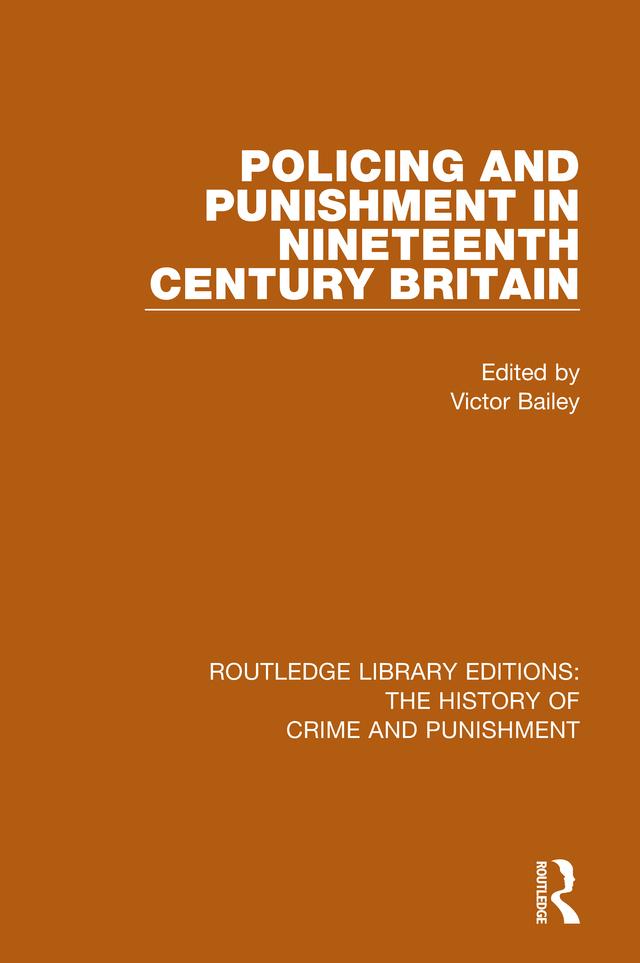
In the years between 1750 and 1868, English criminal justice underwent significant changes. The two most crucial developments were the gradual establishment of an organised, regular police, and the emergence of new secondary punishments, following the restriction in the scope of the death penalty. In place of an ill-paid parish constabulary, functioning largely through a system of rewards and common informers, professional police institutions were given the task of executing a speedy and systematic enforcement of the criminal law. In lieu of the severe and capriciously-administered capital laws, a penalty structure based on a proportionality between the gravity of crimes and the severity of punishments was erected as arguably a more effective deterrent of crime.
This book, first published in 1981, examines the impact of these two important developments and casts new light on the way in which law enforcement evolved during the nineteenth century. This title will be of interest to students of history and criminology.
Betal nemt med kort, Klarna, Apple Pay eller Google Pay. Ikke tilfreds? Du har altid 14 dages fortrydelsesret. Læs mere i vores vilkår. Har du spørgsmål, så send os en mail på hello@memmo.org.
Memmo gør det nemmere at studere – uanset hvor du er i verden. Hos os samler du dine kursusbøger og smarte studieværktøjer ét sted: resuméer, quizzer, podcasts og flashcards. Og så er der Ted, din studieven, der svarer på alt, du undrer dig over. Over 50 000 studerende studerer allerede her – bygget til at hjælpe dig med at lære hurtigere og stresse mindre.