
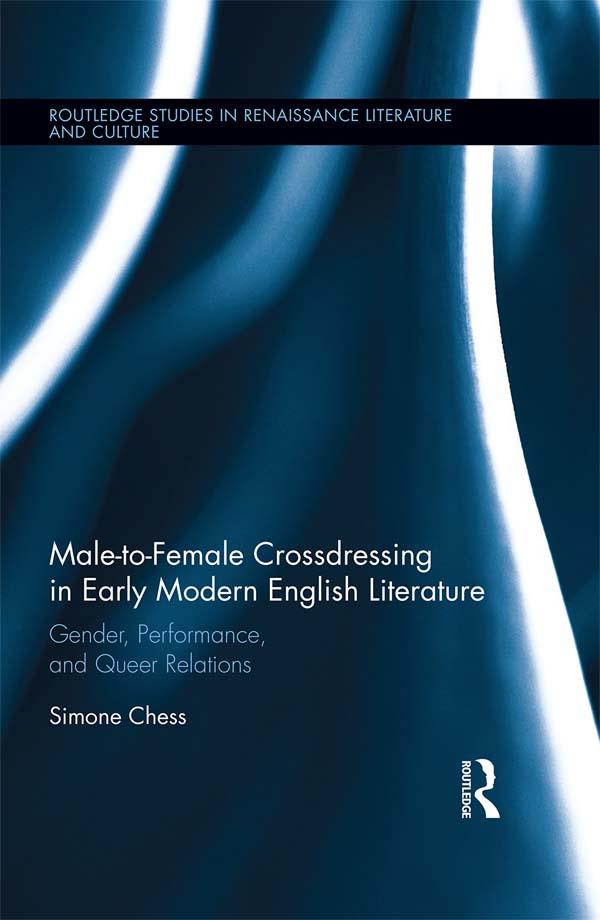
This volume examines and theorizes the oft-ignored phenomenon of male-to-female (MTF) crossdressing in early modern drama, prose, and poetry, inviting MTF crossdressing episodes to take a fuller place alongside instances of female-to-male crossdressing and boy actors’ crossdressing, which have long held the spotlight in early modern gender studies. The author argues that MTF crossdressing episodes are especially rich sources for socially-oriented readings of queer gender—that crossdressers’ genders are constructed and represented in relation to romantic partners, communities, and broader social structures like marriage, economy, and sexuality. Further, she argues that these relational representations show that the crossdresser and his/her allies often benefit financially, socially, and erotically from his/her queer gender presentation, a corrective to the dominant idea that queer gender has always been associated with shame, containment, and correction. By attending to these relational and beneficial representations of MTF crossdressers in early modern literature, the volume helps to make a larger space for queer, genderqueer, male-bodied and queer-feminine representations in our conversations about early modern gender and sexuality.
Betal nemt med kort, Klarna, Apple Pay eller Google Pay. Ikke tilfreds? Du har altid 14 dages fortrydelsesret. Læs mere i vores vilkår. Har du spørgsmål, så send os en mail på hello@memmo.org.
Memmo gør det nemmere at studere – uanset hvor du er i verden. Hos os samler du dine kursusbøger og smarte studieværktøjer ét sted: resuméer, quizzer, podcasts og flashcards. Og så er der Ted, din studieven, der svarer på alt, du undrer dig over. Over 50 000 studerende studerer allerede her – bygget til at hjælpe dig med at lære hurtigere og stresse mindre.