
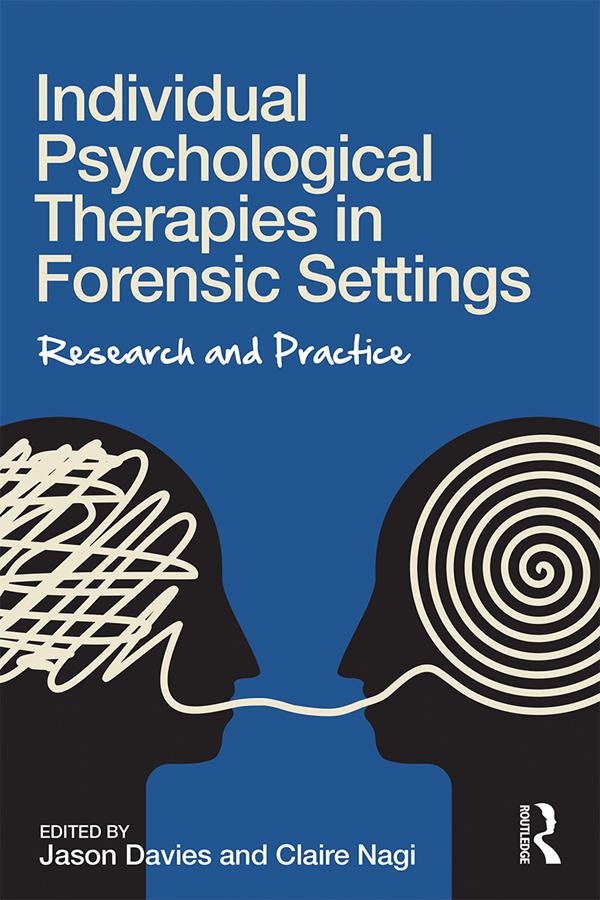
From the ‘nothing works’ maxim of the 1970s to evidence-based interventions to challenge recidivism and promote pro-social behavior, psychological therapy has played an important role in rehabilitation and risk reduction within forensic settings in recent years. And yet the typical group therapy model isn’t always the appropriate path to take.
In this important new book, the aims and effectiveness of individual therapies within forensic settings, both old and new, are assessed and discussed. Including contributions from authors based in the UK, North America, Europe, Australia and New Zealand, a broad range of therapies are covered, including Cognitive Behavioural Therapy, Mentalisation Based Therapy, Schema Therapy, Acceptance and Commitment Therapy and Compassion Focussed Therapy.
Each chapter provides:
- an assessment of the evidence base for effectiveness;
- the adaptations required in a forensic setting;
- whether the therapy is aimed at recidivism or psychological change;
- the client or patient characteristics it is aimed at;
- a case study of the therapy in action.
The final section of the book looks at ethical issues, the relationship between individual and group-based treatment, therapist supervision and deciding which therapies and therapists to select.
This book is essential reading for probation staff, psychologists, criminal justice and liaison workers and specialist treatment staff. It will also be a valuable resource for any student of forensic or clinical psychology.
Betal nemt med kort, Klarna, Apple Pay eller Google Pay. Ikke tilfreds? Du har altid 14 dages fortrydelsesret. Læs mere i vores vilkår. Har du spørgsmål, så send os en mail på hello@memmo.org.
Memmo gør det nemmere at studere – uanset hvor du er i verden. Hos os samler du dine kursusbøger og smarte studieværktøjer ét sted: resuméer, quizzer, podcasts og flashcards. Og så er der Ted, din studieven, der svarer på alt, du undrer dig over. Over 50 000 studerende studerer allerede her – bygget til at hjælpe dig med at lære hurtigere og stresse mindre.