
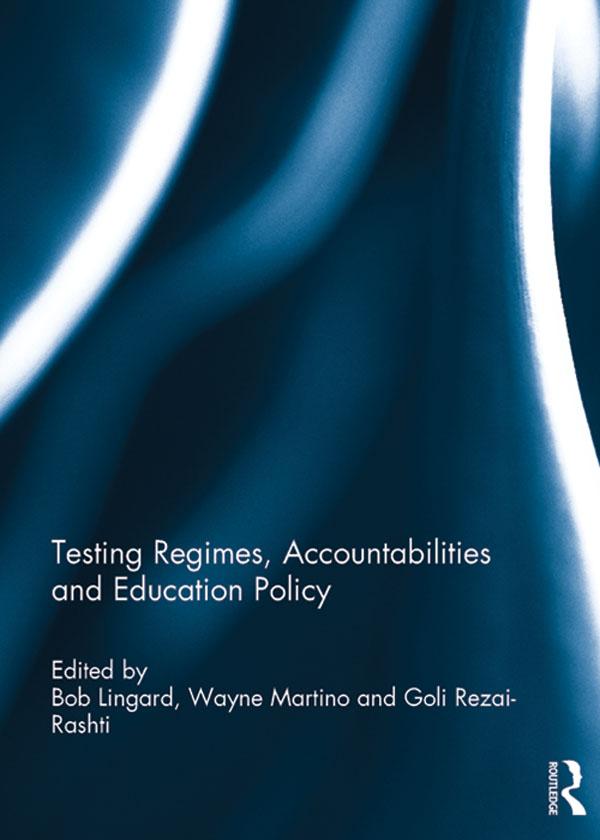
Around the globe, various kinds of testing, including high stakes national census testing, have become meta-policies, steering educational systems in particular directions, and having great effects on schools and on teacher practices, as well as upon student learning and curricula. There has also been a complementary global aspect to this with the OECD’s PISA and IEA’s TIMSS and PIRLS, which have had impacts on national education systems and their policy frameworks.
While there has been a globalized educational policy discourse that suggests that high stakes standardised testing will drive up standards and enhance the quality of a nation’s human capital and thus their international economic competitiveness, this discourse still manifests itself in specific, vernacular, path dependent ways in different nations.
High stakes testing and its effects can also be seen as part of the phenomenon of the ‘datafication’ of the world and ‘policy as numbers’, linked to other reforms of the state, including new public management, network governance, and top-down and test-based modes of accountability. This edited collection provides theoretically and empirically informed analyses of these developments. This book was originally published as a special issue of the Journal of Education Policy.
Betal nemt med kort, Klarna, Apple Pay eller Google Pay. Ikke tilfreds? Du har altid 14 dages fortrydelsesret. Læs mere i vores vilkår. Har du spørgsmål, så send os en mail på hello@memmo.org.
Memmo gør det nemmere at studere – uanset hvor du er i verden. Hos os samler du dine kursusbøger og smarte studieværktøjer ét sted: resuméer, quizzer, podcasts og flashcards. Og så er der Ted, din studieven, der svarer på alt, du undrer dig over. Over 50 000 studerende studerer allerede her – bygget til at hjælpe dig med at lære hurtigere og stresse mindre.