
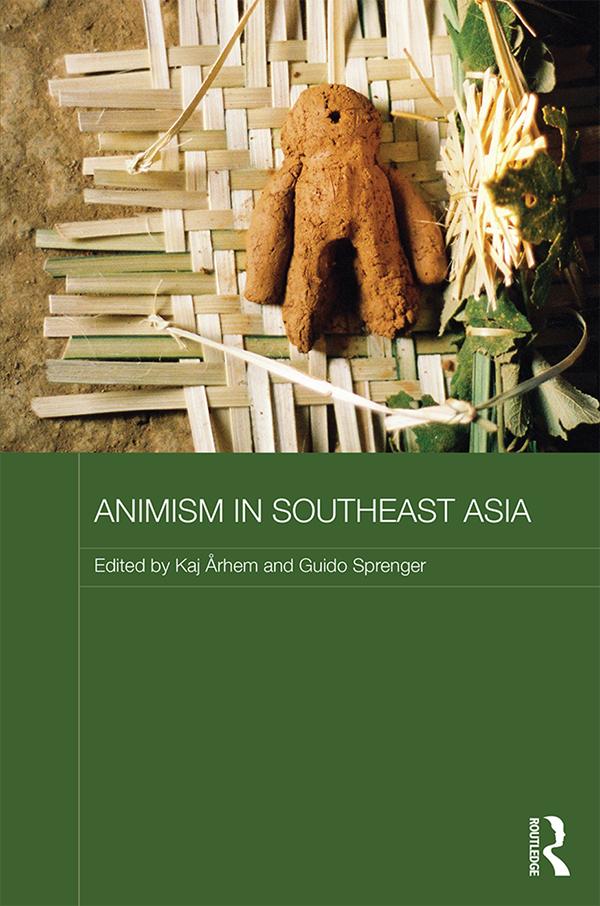
Animism refers to ontologies or worldviews which assign agency and personhood to human and non-human beings alike. Recent years have seen a revival of this concept in anthropology, where it is now discussed as an alternative to modern-Western naturalistic notions of human-environment relations.
Based on original fieldwork, this book presents a number of case studies of animism from insular and peninsular Southeast Asia and offers a comprehensive overview of the phenomenon – its diversity and underlying commonalities and its resilience in the face of powerful forces of change. Critically engaging with the current standard notion of animism, based on hunter-gatherer and horticulturalist societies in other regions, it examines the roles of life forces, souls and spirits in local cosmologies and indigenous religion. It proposes an expansion of the concept to societies featuring mixed farming, sacrifice and hierarchy and explores the question of how non-human agents are created through acts of attention and communication, touching upon the relationship between animist ontologies, world religion, and the state.
Shedding new light on Southeast Asian religious ethnographic research, the book is a significant contribution to anthropological theory and the revitalization of the concept of animism in the humanities and social sciences.
Betal nemt med kort, Klarna, Apple Pay eller Google Pay. Ikke tilfreds? Du har altid 14 dages fortrydelsesret. Læs mere i vores vilkår. Har du spørgsmål, så send os en mail på hello@memmo.org.
Memmo gør det nemmere at studere – uanset hvor du er i verden. Hos os samler du dine kursusbøger og smarte studieværktøjer ét sted: resuméer, quizzer, podcasts og flashcards. Og så er der Ted, din studieven, der svarer på alt, du undrer dig over. Over 50 000 studerende studerer allerede her – bygget til at hjælpe dig med at lære hurtigere og stresse mindre.