
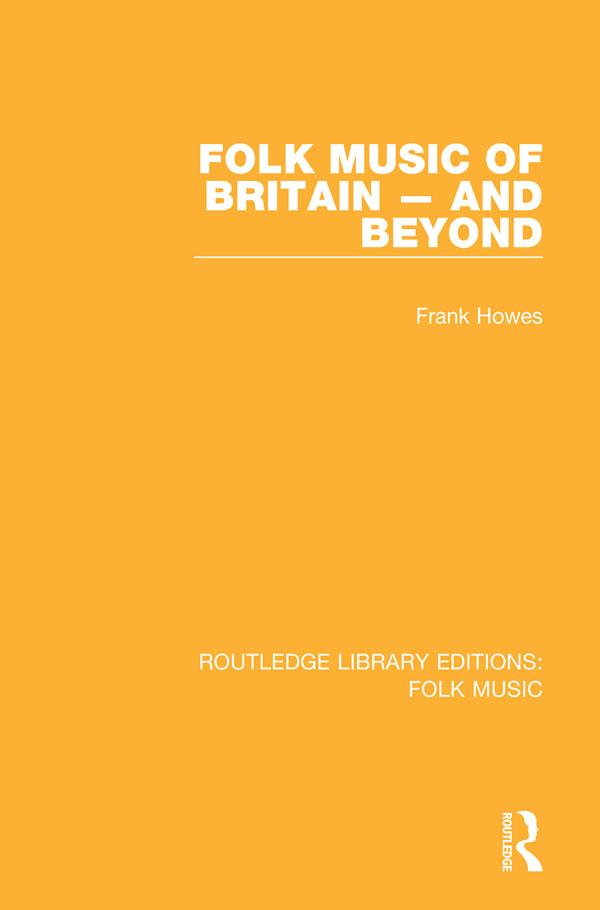
Originally published in 1969. Until the latter half of the nineteenth century, it was thought that England, alone among the European countries, and unlike Scotland and Ireland where collections of ballads and songs had already been published as early as the eighteenth century, had no important native tradition of music. The founding of the (English) Folk-Song Society in 1898, however, and the pioneering work of such collectors as Lucy Broadwood, the Reverend S. Baring-Gould and, later, Cecil Sharp uncovered a still flourishing folk culture. Since then interest in this subject has grown steadily, and the bibliography of publications of actual folk-songs and ballads is now huge. Frank Howes sets out a general and scholarly introduction, first examining in detail the history and origins of folk music and going on to show the nature and vast amount of the material, enforcing his arguments with a wealth of examples from around the world. His discussion of the differences of national idiom leads on to a comparison of British folk music with that of other European countries and America, in which he pays due attention to the Celtic and Norse traditions. Separate sections on balladry, carols, street cries, broadsides, sea shanties, nursery rhymes and instruments illustrate both the variety of folk music and the extent to which it permeates our national heritage.
Betal nemt med kort, Klarna, Apple Pay eller Google Pay. Ikke tilfreds? Du har altid 14 dages fortrydelsesret. Læs mere i vores vilkår. Har du spørgsmål, så send os en mail på hello@memmo.org.
Memmo gør det nemmere at studere – uanset hvor du er i verden. Hos os samler du dine kursusbøger og smarte studieværktøjer ét sted: resuméer, quizzer, podcasts og flashcards. Og så er der Ted, din studieven, der svarer på alt, du undrer dig over. Over 50 000 studerende studerer allerede her – bygget til at hjælpe dig med at lære hurtigere og stresse mindre.