
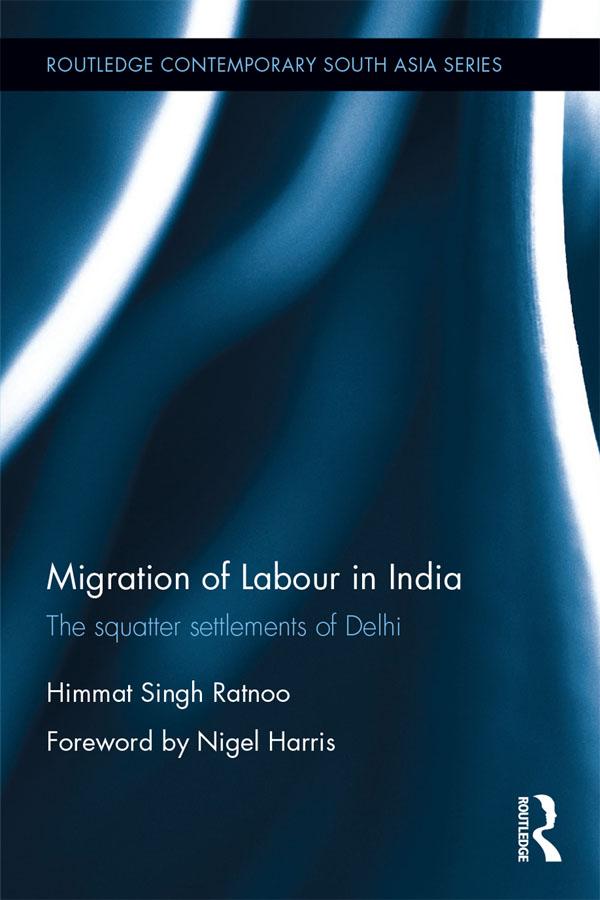
Migration – both within and between countries – is increasingly one of the world's most important policy issues. The faster the Indian economy grows, the larger will be the geographical redistribution of the workforce from localities of low to those of high employment growth. Thus, territorial mobility is fundamental both to realizing the full economic potential of India's people and to allowing the population to escape from rural poverty.
The book analyses the decisive factors in labour migration. Based upon a thorough and robust examination of migrants to three slum localities of Delhi stretching over four decades, the author examines why people migrate, the circumstances of their decision and their experience at their destination. He investigates the myths of urban policy – that "rural development" will reduce migration to the cities, that "growth poles" can be created to divert migrant flows, and that government has the power to influence significantly migration scales and directions while pursuing essentially unpredictable market-driven economic growth.
Testing the essential theoretical basis for urban policy in India, the book is of interest to academics studying migration of labour and urbanization, and those interested in South Asian Studies.
Betal nemt med kort, Klarna, Apple Pay eller Google Pay. Ikke tilfreds? Du har altid 14 dages fortrydelsesret. Læs mere i vores vilkår. Har du spørgsmål, så send os en mail på hello@memmo.org.
Memmo gør det nemmere at studere – uanset hvor du er i verden. Hos os samler du dine kursusbøger og smarte studieværktøjer ét sted: resuméer, quizzer, podcasts og flashcards. Og så er der Ted, din studieven, der svarer på alt, du undrer dig over. Over 50 000 studerende studerer allerede her – bygget til at hjælpe dig med at lære hurtigere og stresse mindre.