
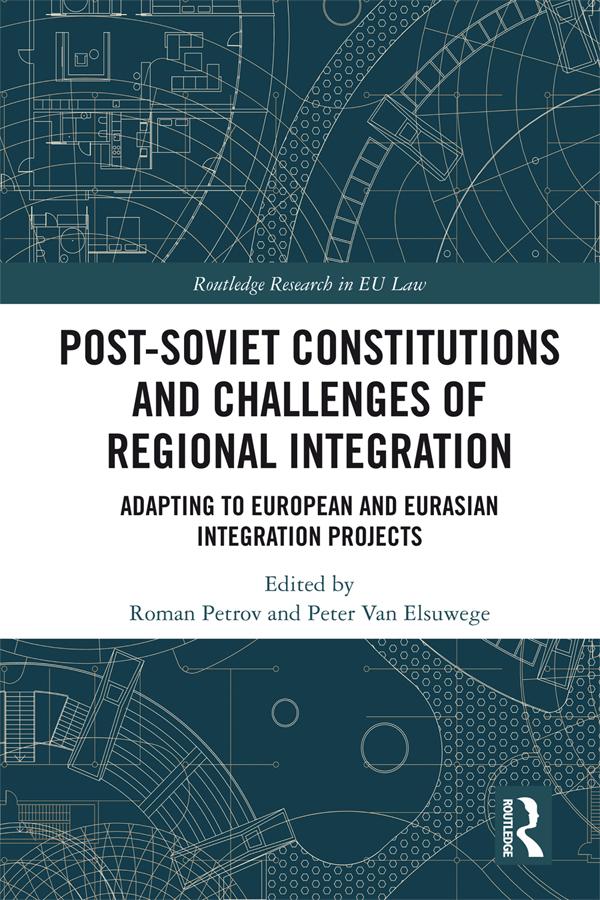
This book explores the implications of European and Eurasian integration projects for the constitutional orders of post-Soviet countries. On the one hand, the process of Eurasian integration, culminating in the establishment of the Eurasian Economic Union (EAEU), led to the creation of new institutions and mechanisms influencing the domestic legal order of the participating countries. On the other hand, the process of European integration, epitomised through the European Union (EU), constitutes an important source of reference for domestic constitutional developments in the countries which recently concluded a new generation of Association Agreements with the EU. This book analyses the implications of both processes.
The book addresses the relevant experience of the countries from Central and Eastern Europe with transitional constitutionalism, mapping out the significance of European and Eurasian integration for protecting the rule of law in the post-Soviet space and identifying the constitutional implications and challenges of the EAEU and the new generation of Association Agreements. It also provides detailed country reports on national constitutional orders in the post-Soviet space and their adaptability to regional integration projects, authored by leading academics from the countries concerned, providing a number of general reflections about the evolution of post-Soviet constitutions in light of European and Eurasian integration projects.
Betal nemt med kort, Klarna, Apple Pay eller Google Pay. Ikke tilfreds? Du har altid 14 dages fortrydelsesret. Læs mere i vores vilkår. Har du spørgsmål, så send os en mail på hello@memmo.org.
Memmo gør det nemmere at studere – uanset hvor du er i verden. Hos os samler du dine kursusbøger og smarte studieværktøjer ét sted: resuméer, quizzer, podcasts og flashcards. Og så er der Ted, din studieven, der svarer på alt, du undrer dig over. Over 50 000 studerende studerer allerede her – bygget til at hjælpe dig med at lære hurtigere og stresse mindre.