
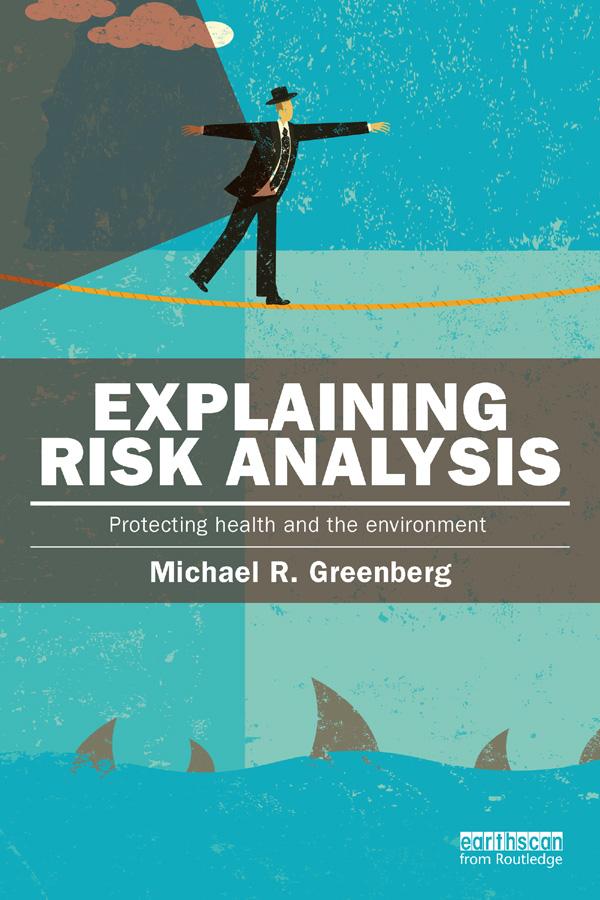
Risk analysis is not a narrowly defined set of applications. Rather, it is widely used to assess and manage a plethora of hazards that threaten dire implications. However, too few people actually understand what risk analysis can help us accomplish and, even among experts, knowledge is often limited to one or two applications.
Explaining Risk Analysis frames risk analysis as a holistic planning process aimed at making better risk-informed decisions and emphasizing the connections between the parts. This framework requires an understanding of basic terms, including explanations of why there is no universal agreement about what risk means, much less risk assessment, risk management and risk analysis. Drawing on a wide range of case studies, the book illustrates the ways in which risk analysis can help lead to better decisions in a variety of scenarios, including the destruction of chemical weapons, management of nuclear waste and the response to passenger rail threats. The book demonstrates how the risk analysis process and the data, models and processes used in risk analysis will clarify, rather than obfuscate, decision-makers’ options.
This book will be of great interest to students and scholars of risk assessment, risk management, public health, environmental science, environmental economics and environmental psychology.
Betal nemt med kort, Klarna, Apple Pay eller Google Pay. Ikke tilfreds? Du har altid 14 dages fortrydelsesret. Læs mere i vores vilkår. Har du spørgsmål, så send os en mail på hello@memmo.org.
Memmo gør det nemmere at studere – uanset hvor du er i verden. Hos os samler du dine kursusbøger og smarte studieværktøjer ét sted: resuméer, quizzer, podcasts og flashcards. Og så er der Ted, din studieven, der svarer på alt, du undrer dig over. Over 50 000 studerende studerer allerede her – bygget til at hjælpe dig med at lære hurtigere og stresse mindre.