
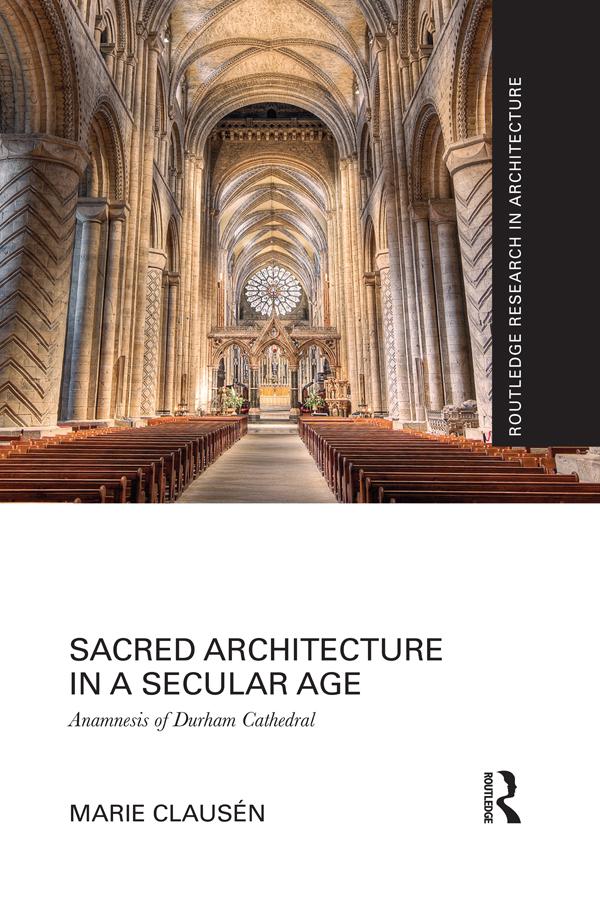
Having won more than one recent poll as Britain’s best-loved building, the appeal of Durham Cathedral appears abiding, which begs the question whether an iconic sacred building can retain meaning and affective pertinence for contemporary, secular visitors. Using the example of Durham Cathedral, this book sets out to explore wherein the appeal of historic churches lies today and considers questions of how and why their preservation into a post-Christian era should be secured.
By including feedback from visitors to the cathedral, and the author’s own very personal account of the cathedral in the form of an ekphrasis, this work seeks to privilege an interpretation of architecture that is based on the individual experience rather than on more conventional narratives of architecture history and cultural heritage policy. Recognising the implication of our choice of narrative on the perceived value of historic churches is crucial when deliberating their future role.
This book puts forth a compelling case for historical sacred architecture, suggesting that its loss - through imperceptive conservation practices as much as through neglect or demolition - would diminish us all, secularists, atheists and agnostics included.
Betal nemt med kort, Klarna, Apple Pay eller Google Pay. Ikke tilfreds? Du har altid 14 dages fortrydelsesret. Læs mere i vores vilkår. Har du spørgsmål, så send os en mail på hello@memmo.org.
Memmo gør det nemmere at studere – uanset hvor du er i verden. Hos os samler du dine kursusbøger og smarte studieværktøjer ét sted: resuméer, quizzer, podcasts og flashcards. Og så er der Ted, din studieven, der svarer på alt, du undrer dig over. Over 50 000 studerende studerer allerede her – bygget til at hjælpe dig med at lære hurtigere og stresse mindre.