
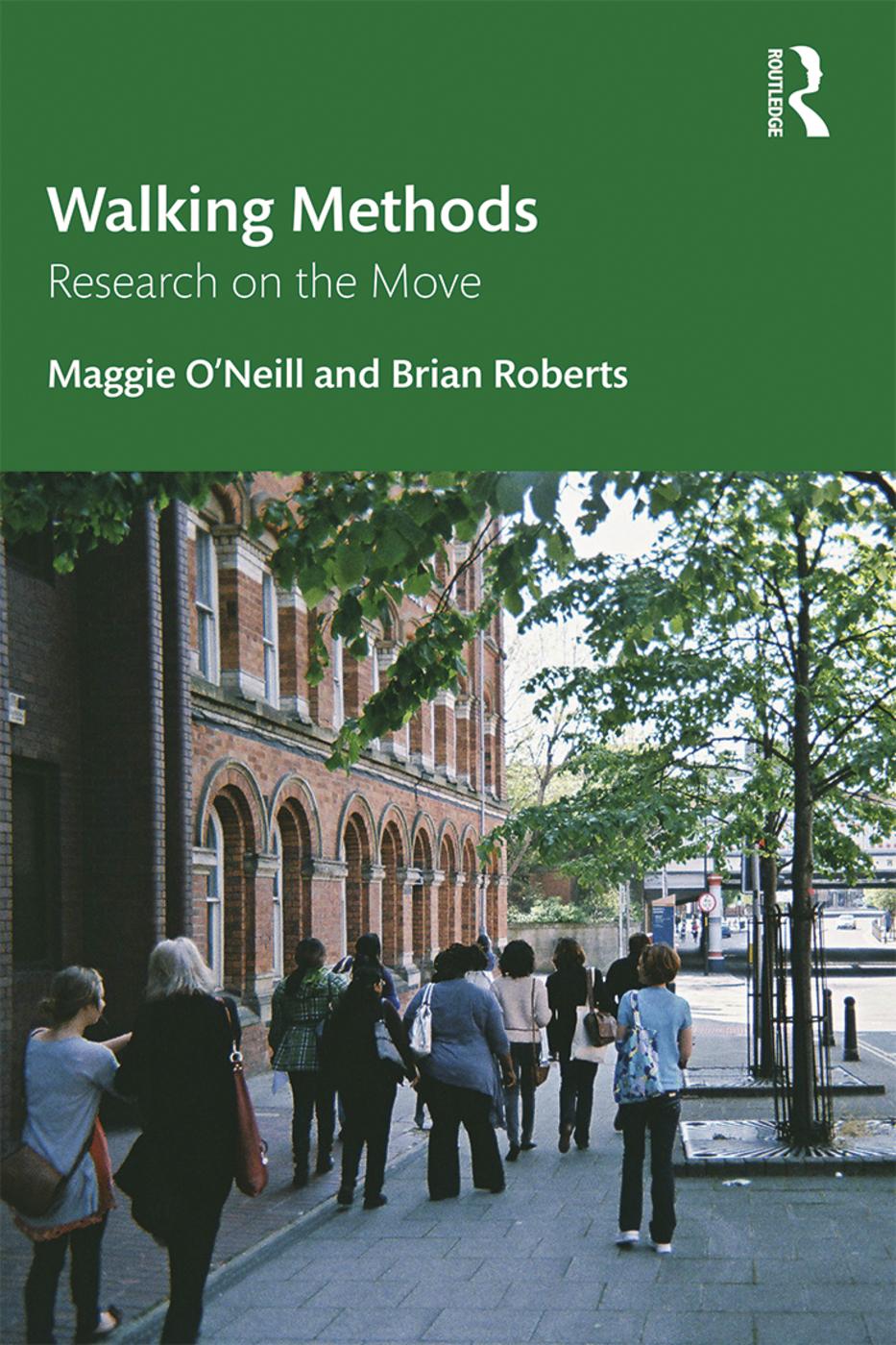
This book introduces and critically explores walking as an innovative method for doing social research, showing how its sensate and kinaesthetic attributes facilitate connections with lived experiences, journeys and memories, communities and identities. The book situates walking methods historically, sociologically, and in relation to biographical and arts-based research, as well as new work on mobilities, the digital, spatial, and the sensory.
The book is organised into three sections: theorising; experiencing; and imagining walking as a new method for doing biographical research. There is a key focus upon the Walking Interview as a Biographical Method (WIBM) on the move to usefully explore migration, memory, and urban landscapes, as part of participatory, visual, and ethnographic research with marginalised communities and artists and as re-formative and transgressive. The book concludes with autobiographical walks taken by the authors and a discussion about the future of the walking interview as biographical method.
Walking Methods combines theory with a series of original ethnographic and participatory research examples. Practical exercises and a guide to using walking as a method help to make this a rich resource for social science researchers, students, walking artists, and biographical researchers.
Betal nemt med kort, Klarna, Apple Pay eller Google Pay. Ikke tilfreds? Du har altid 14 dages fortrydelsesret. Læs mere i vores vilkår. Har du spørgsmål, så send os en mail på hello@memmo.org.
Memmo gør det nemmere at studere – uanset hvor du er i verden. Hos os samler du dine kursusbøger og smarte studieværktøjer ét sted: resuméer, quizzer, podcasts og flashcards. Og så er der Ted, din studieven, der svarer på alt, du undrer dig over. Over 50 000 studerende studerer allerede her – bygget til at hjælpe dig med at lære hurtigere og stresse mindre.