
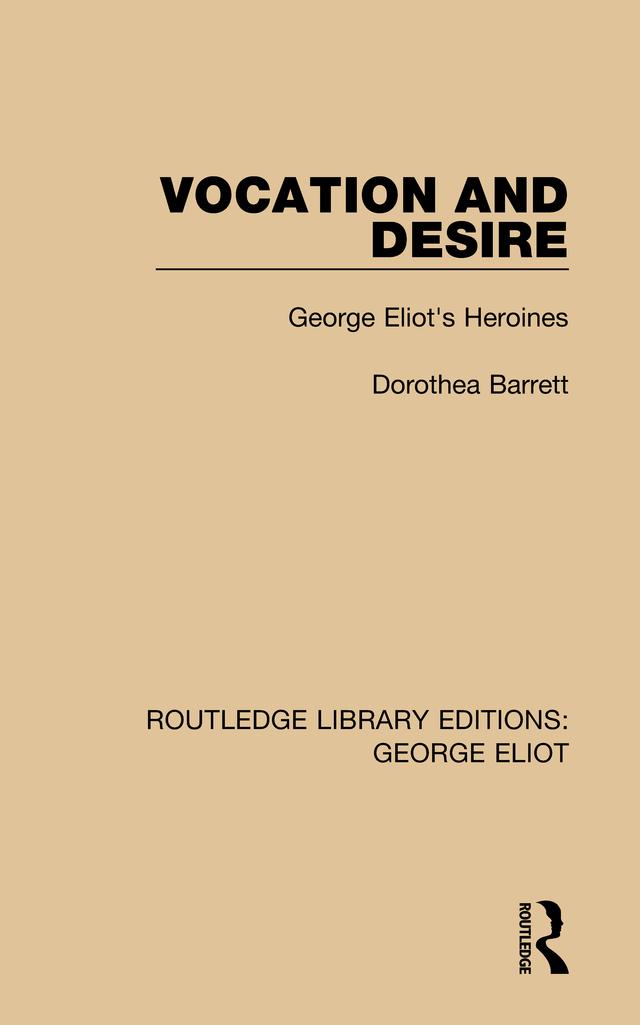
First published in 1989. Generations of critics have seen George Eliot as a conservative Victorian high moralist and sybil. Vocation and Desire questions that image, and finds in her work elements of anger, feminism, subversiveness, revenge, iconoclasm, wit, and eroticism – elements that we have been taught not to expect. After looking at the development of the sybilline image and the gradual eclipse of the subversive George Eliot – which Eliot herself initiated – Dorothea Barrett goes on to investigate the evidence of the novels themselves and finds an alternative emphasis. Her study of the heroines of the six major novels and issues of language and desire provides a refreshing and acute analysis of the contradictions and strengths of Eliot’s work. She also considers the reception of George Eliot by feminist critics and the broader implications of her work for contemporary feminism. This title will be of interest to students of literature.
Betal nemt med kort, Klarna, Apple Pay eller Google Pay. Ikke tilfreds? Du har altid 14 dages fortrydelsesret. Læs mere i vores vilkår. Har du spørgsmål, så send os en mail på hello@memmo.org.
Memmo gør det nemmere at studere – uanset hvor du er i verden. Hos os samler du dine kursusbøger og smarte studieværktøjer ét sted: resuméer, quizzer, podcasts og flashcards. Og så er der Ted, din studieven, der svarer på alt, du undrer dig over. Over 50 000 studerende studerer allerede her – bygget til at hjælpe dig med at lære hurtigere og stresse mindre.