
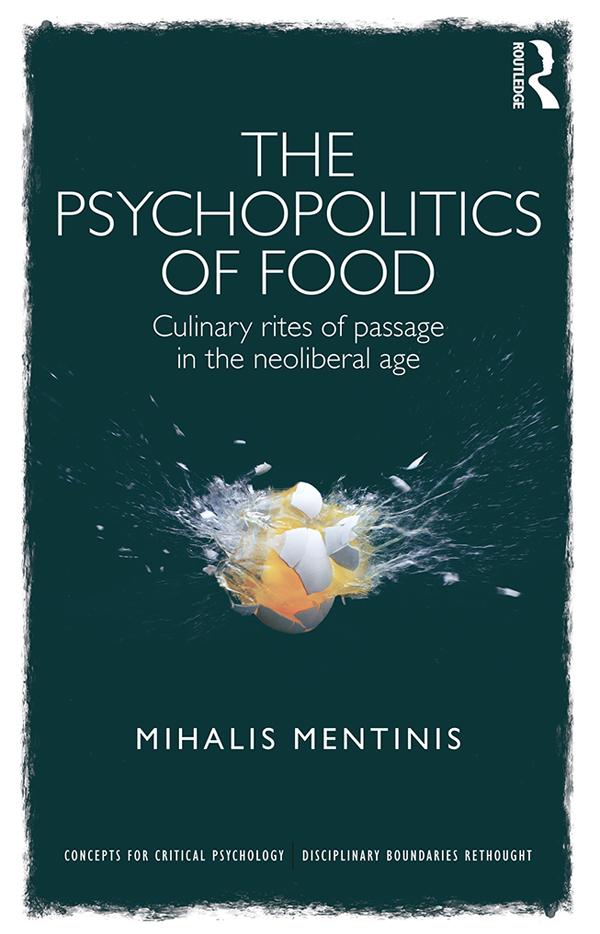
The Psychopolitics of Food probes into the contemporary ‘foodscape’, examining culinary practices and food habits and in particular the ways in which they conflate with neoliberal political economy. It suggests that generic alimentary and culinary practices constitute technologies of the self and the body and argues that the contemporary preoccupation with food takes the form of ‘rites of passage’ that express and mark the transition from a specific stage of neoliberal development to another vis-à-vis a re-configuration of the alimentary and sexual regimes.
Even though these rites of passage are taking place on the borders of cultural bi-polarities, their function, nevertheless, is precisely to define these borders as sites of a neoliberal transitional demand; that is, to produce a cultural bifurcation between ‘eating orders’ and ‘eating dis-orders’, by promoting and naturalising certain social logics while simultaneously rendering others as abject and anachronistic.
The book is a worthwhile read for researchers and advanced scholars in the areas of food studies, critical psychology, anthropology and sociology.
Betal nemt med kort, Klarna, Apple Pay eller Google Pay. Ikke tilfreds? Du har altid 14 dages fortrydelsesret. Læs mere i vores vilkår. Har du spørgsmål, så send os en mail på hello@memmo.org.
Memmo gør det nemmere at studere – uanset hvor du er i verden. Hos os samler du dine kursusbøger og smarte studieværktøjer ét sted: resuméer, quizzer, podcasts og flashcards. Og så er der Ted, din studieven, der svarer på alt, du undrer dig over. Over 50 000 studerende studerer allerede her – bygget til at hjælpe dig med at lære hurtigere og stresse mindre.