
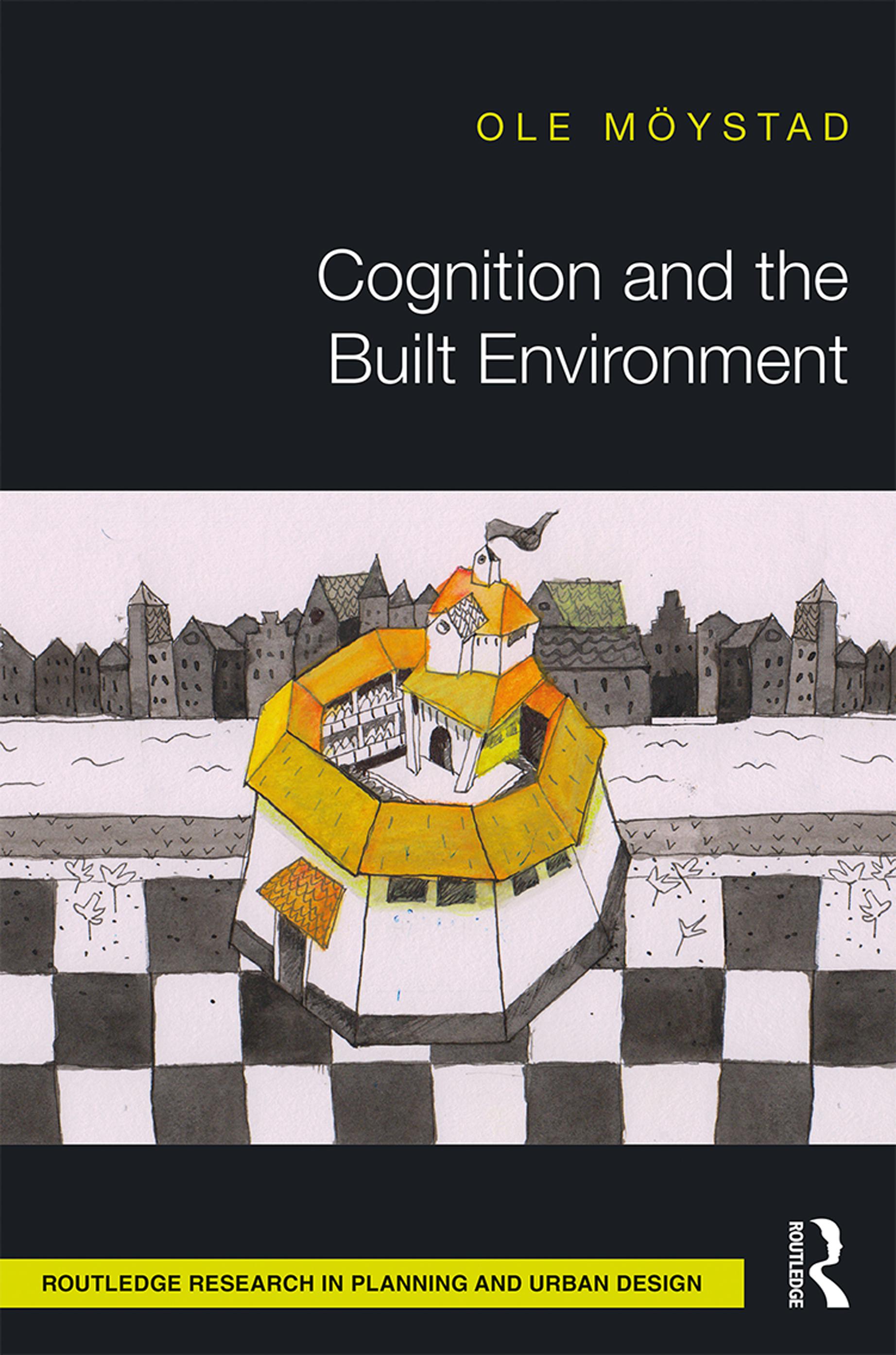
Cognition and the Built Environment argues that interacting with our built environment, as users and as architects, is a cognitive process. It claims that architecture, in its form and meaning, is a basic, embodied level of human cognition.
The assumption is that we and our built environment together form an intelligent system, a cognitive feedback loop between us and the world of which we are part. With this as a vantage point, the book discusses the meaning and intelligence of concrete architectural environments as well as the agency of the architect, of his client and of the user.
The inquiry oscillates between abstract thought, topological models and cognitive semiotics, between pragmatist philosophy and the professional practice of planning cities, developing projects and using objects. Architecture serves more complex purposes than our caves, paths and landmarks did.
Written for students and academics of urban design, urban planning and architectural theory, Cognition and the Built Environment argues that human cognition feeds on the interaction between thought, agency and built environment, and that architecture is the spatial form of this interaction.
Betal nemt med kort, Klarna, Apple Pay eller Google Pay. Ikke tilfreds? Du har altid 14 dages fortrydelsesret. Læs mere i vores vilkår. Har du spørgsmål, så send os en mail på hello@memmo.org.
Memmo gør det nemmere at studere – uanset hvor du er i verden. Hos os samler du dine kursusbøger og smarte studieværktøjer ét sted: resuméer, quizzer, podcasts og flashcards. Og så er der Ted, din studieven, der svarer på alt, du undrer dig over. Over 50 000 studerende studerer allerede her – bygget til at hjælpe dig med at lære hurtigere og stresse mindre.