
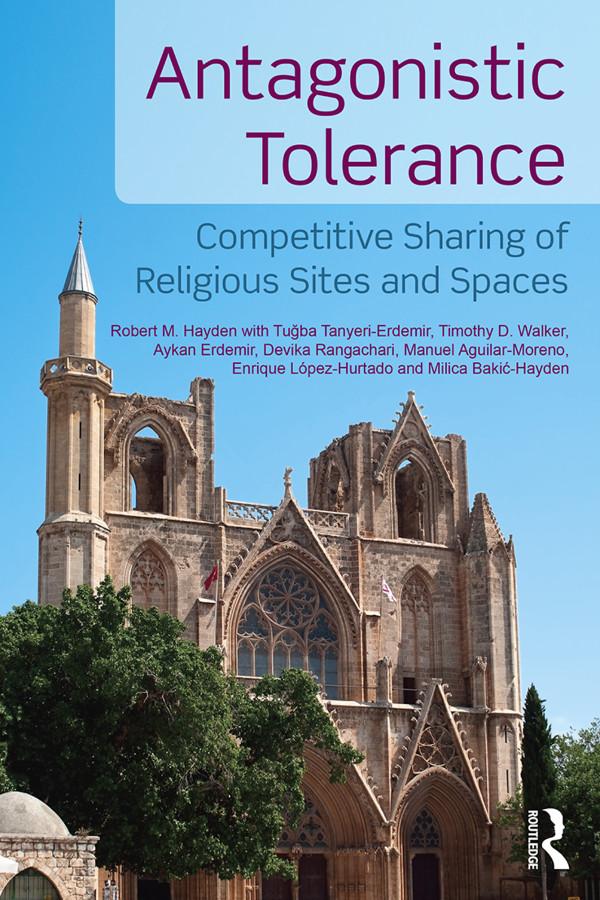
Antagonistic Tolerance examines patterns of coexistence and conflict amongst members of different religious communities, using multidisciplinary research to analyze groups who have peacefully intermingled for generations, and who may have developed aspects of syncretism in their religious practices, and yet have turned violently on each other. Such communities define themselves as separate peoples, with different and often competing interests, yet their interaction is usually peaceable provided the dominance of one group is clear. The key indicator of dominance is control over central religious sites, which may be tacitly shared for long periods, but later contested and even converted as dominance changes. By focusing on these shared and contested sites, this volume allows for a wider understanding of relations between these communities.
Using a range of ethnographic, historical and archaeological data from the Balkans, India, Mexico, Peru, Portugal and Turkey, Antagonistic Tolerance develops a comparative model of the competitive sharing and transformation of religious sites. These studies are not considered as isolated cases, but are instead woven into a unified analytical framework which explains how long-term peaceful interactions between religious communities can turn conflictual and even result in ethnic cleansing.
Betal nemt med kort, Klarna, Apple Pay eller Google Pay. Ikke tilfreds? Du har altid 14 dages fortrydelsesret. Læs mere i vores vilkår. Har du spørgsmål, så send os en mail på hello@memmo.org.
Memmo gør det nemmere at studere – uanset hvor du er i verden. Hos os samler du dine kursusbøger og smarte studieværktøjer ét sted: resuméer, quizzer, podcasts og flashcards. Og så er der Ted, din studieven, der svarer på alt, du undrer dig over. Over 50 000 studerende studerer allerede her – bygget til at hjælpe dig med at lære hurtigere og stresse mindre.