
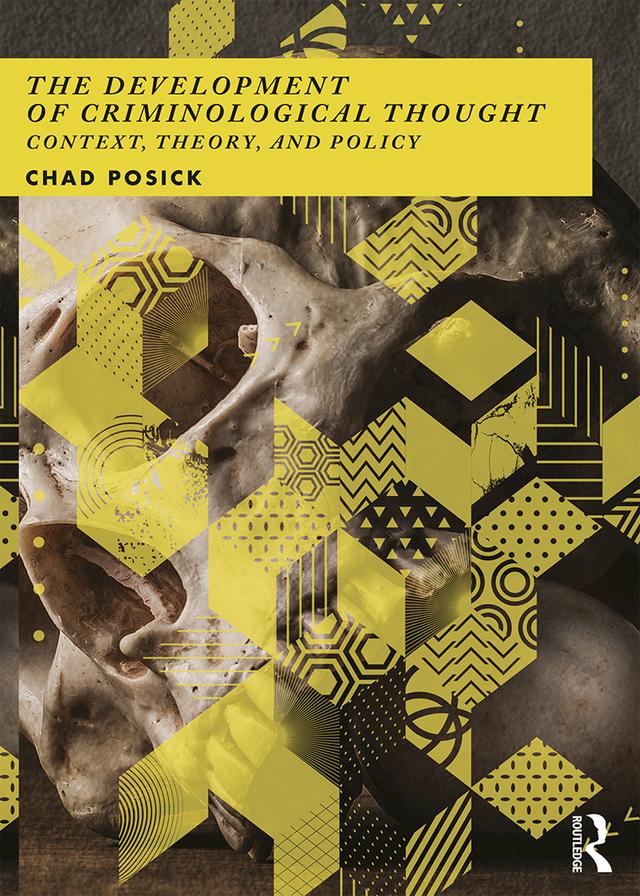
This book focuses on the history and development of criminological thought from the pre-Enlightenment period to the present and offers a detailed and chronological overview of competing theoretical perspectives in criminology in their social and political context.
This book covers:
- A discussion of how major theorists came to espouse their ideas and how the social context of the time influenced the development criminological thought;
- An exploration of the scientific method and the way in which theories are tested;
- Details of the origins of each theory as well as their recent developments in scholarship and research;
- Comparative and international research in theory;
- The empirical support for theory and the relationship between research and policy;
- Biosocial and developmental criminology, including the biosocial underpinnings of criminal behavior and the influence of neuroscience and brain psychology;
- Theoretical applications for explaining different crime types, such as genocide, white-collar crime, and environmental crime;
- A summary of the current state of criminological knowledge and a vision for the future of criminology.
The book includes lists of further reading and chapter summaries, and is supported by timelines of key works and events. This book is essential reading for courses on criminological theory, criminal behaviour, criminal psychology and biosocial criminology.
Betal nemt med kort, Klarna, Apple Pay eller Google Pay. Ikke tilfreds? Du har altid 14 dages fortrydelsesret. Læs mere i vores vilkår. Har du spørgsmål, så send os en mail på hello@memmo.org.
Memmo gør det nemmere at studere – uanset hvor du er i verden. Hos os samler du dine kursusbøger og smarte studieværktøjer ét sted: resuméer, quizzer, podcasts og flashcards. Og så er der Ted, din studieven, der svarer på alt, du undrer dig over. Over 50 000 studerende studerer allerede her – bygget til at hjælpe dig med at lære hurtigere og stresse mindre.