
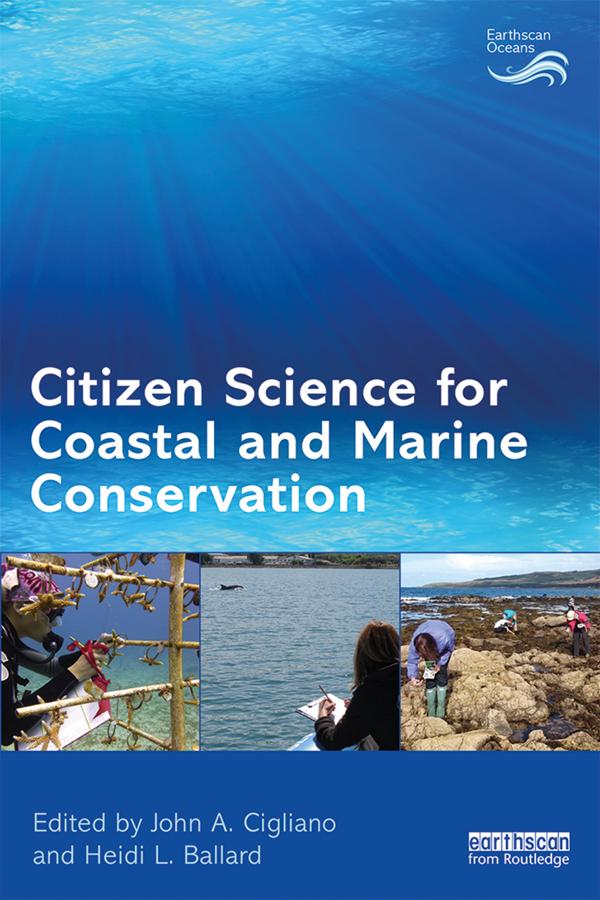
In recent years, citizen science has emerged as a powerful new concept to enable the general public, students, and volunteers to become involved in scientific research. A prime example is in biodiversity conservation, where data collection and monitoring can be greatly enhanced through citizen participation. This is the first book to provide much needed guidance and case studies from marine and coastal conservation.
The novelty and rapid expansion of the field has created a demand for the discussion of key issues and the development of best practices. The book demonstrates the utility and feasibility, as well as limitations, of using marine and coastal citizen science for conservation, and by providing critical considerations (i.e.which questions and systems are best suited for citizen science), presents recommendations for best practices for successful marine and coastal citizen science projects.
A range of case studies, for example, on monitoring of seabird populations, invasive species, plastics pollution, and the impacts of climate change, from different parts of the world, is included. Also included are discussions on engaging youth, indigenous communities, and divers and snorkelers as citizen scientists, as well as best practices on communication within citizen science, building trust with stakeholders, and informing marine policy as part of this exciting and empowering way of improving marine and coastal conservation.
.
Betal nemt med kort, Klarna, Apple Pay eller Google Pay. Ikke tilfreds? Du har altid 14 dages fortrydelsesret. Læs mere i vores vilkår. Har du spørgsmål, så send os en mail på hello@memmo.org.
Memmo gør det nemmere at studere – uanset hvor du er i verden. Hos os samler du dine kursusbøger og smarte studieværktøjer ét sted: resuméer, quizzer, podcasts og flashcards. Og så er der Ted, din studieven, der svarer på alt, du undrer dig over. Over 50 000 studerende studerer allerede her – bygget til at hjælpe dig med at lære hurtigere og stresse mindre.