
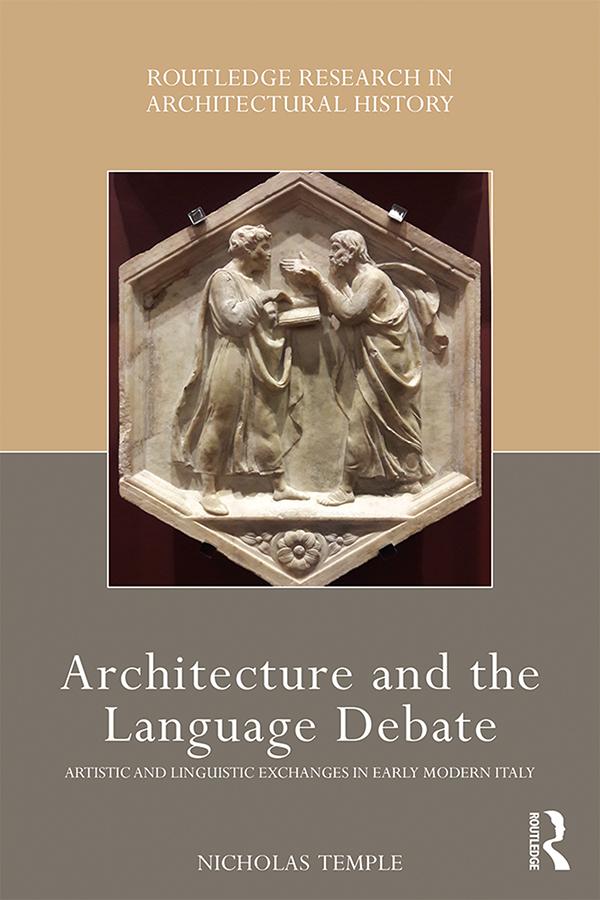
This book examines the creative exchanges between architects, artists and intellectuals, from the Early Renaissance to the beginning of the Enlightenment, in the forging of relationships between architecture and emerging concepts of language in early modern Italy. The study extends across the spectrum of linguistic disputes during this time – among members of the clergy, humanists, philosophers and polymaths – on issues of grammar, rhetoric, philology, etymology and epigraphy, and how these disputes paralleled and informed important developments in architectural thinking and practice. Drawing upon a wealth of primary source material, such as humanist tracts, philosophical works, architectural/antiquarian treatises, epigraphic/philological studies, religious sermons and grammaticae, the book traces key periods when the emerging field of linguistics in early modern Italy impacted on the theory, design and symbolism of buildings.
Betal nemt med kort, Klarna, Apple Pay eller Google Pay. Ikke tilfreds? Du har altid 14 dages fortrydelsesret. Læs mere i vores vilkår. Har du spørgsmål, så send os en mail på hello@memmo.org.
Memmo gør det nemmere at studere – uanset hvor du er i verden. Hos os samler du dine kursusbøger og smarte studieværktøjer ét sted: resuméer, quizzer, podcasts og flashcards. Og så er der Ted, din studieven, der svarer på alt, du undrer dig over. Over 50 000 studerende studerer allerede her – bygget til at hjælpe dig med at lære hurtigere og stresse mindre.