
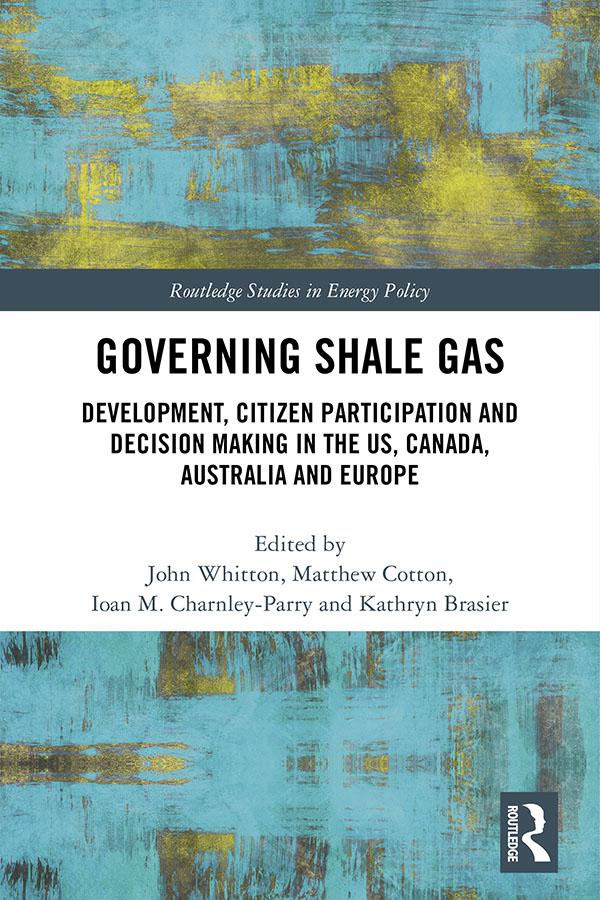
Shale energy development is an issue of global importance. The number of reserves globally, and their potential economic return, have increased dramatically in the past decade. Questions abound, however, about the appropriate governance systems to manage the risks of unconventional oil and gas development and the ability for citizens to engage and participate in decisions regarding these systems. Stakeholder participation is essential for the social and political legitimacy of energy extraction and production, what the industry calls a 'social license' to operate.
This book attempts to bring together critical themes inherent in the energy governance literature and illustrate them through cases in multiple countries, including the US, the UK, Canada, South Africa, Germany and Poland. These themes include how multiple actors and institutions – industry, governments and regulatory bodies at all scales, communities, opposition movements, and individual landowners – have roles in developing, contesting, monitoring, and enforcing practices and regulations within unconventional oil and gas development. Overall, the book proposes a systemic, participatory, community-led approach required to achieve a form of legitimacy that allows communities to derive social priorities by a process of community visioning.
This book will be of great relevance to scholars and policy-makers with an interest in shale gas development, and energy policy and governance.
Betal nemt med kort, Klarna, Apple Pay eller Google Pay. Ikke tilfreds? Du har altid 14 dages fortrydelsesret. Læs mere i vores vilkår. Har du spørgsmål, så send os en mail på hello@memmo.org.
Memmo gør det nemmere at studere – uanset hvor du er i verden. Hos os samler du dine kursusbøger og smarte studieværktøjer ét sted: resuméer, quizzer, podcasts og flashcards. Og så er der Ted, din studieven, der svarer på alt, du undrer dig over. Over 50 000 studerende studerer allerede her – bygget til at hjælpe dig med at lære hurtigere og stresse mindre.