
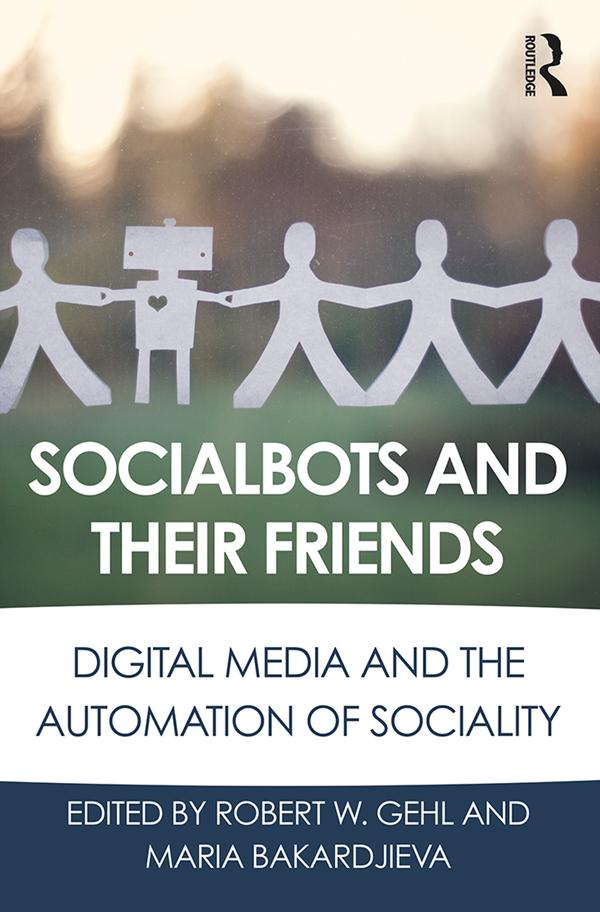
Many users of the Internet are aware of bots: automated programs that work behind the scenes to come up with search suggestions, check the weather, filter emails, or clean up Wikipedia entries. More recently, a new software robot has been making its presence felt in social media sites such as Facebook and Twitter – the socialbot. However, unlike other bots, socialbots are built to appear human. While a weatherbot will tell you if it's sunny and a spambot will incessantly peddle Viagra, socialbots will ask you questions, have conversations, like your posts, retweet you, and become your friend. All the while, if they're well-programmed, you won't know that you're tweeting and friending with a robot.
Who benefits from the use of software robots? Who loses? Does a bot deserve rights? Who pulls the strings of these bots? Who has the right to know what about them? What does it mean to be intelligent? What does it mean to be a friend? Socialbots and Their Friends: Digital Media and the Automation of Sociality is one of the first academic collections to critically consider the socialbot and tackle these pressing questions.
Betal nemt med kort, Klarna, Apple Pay eller Google Pay. Ikke tilfreds? Du har altid 14 dages fortrydelsesret. Læs mere i vores vilkår. Har du spørgsmål, så send os en mail på hello@memmo.org.
Memmo gør det nemmere at studere – uanset hvor du er i verden. Hos os samler du dine kursusbøger og smarte studieværktøjer ét sted: resuméer, quizzer, podcasts og flashcards. Og så er der Ted, din studieven, der svarer på alt, du undrer dig over. Over 50 000 studerende studerer allerede her – bygget til at hjælpe dig med at lære hurtigere og stresse mindre.