
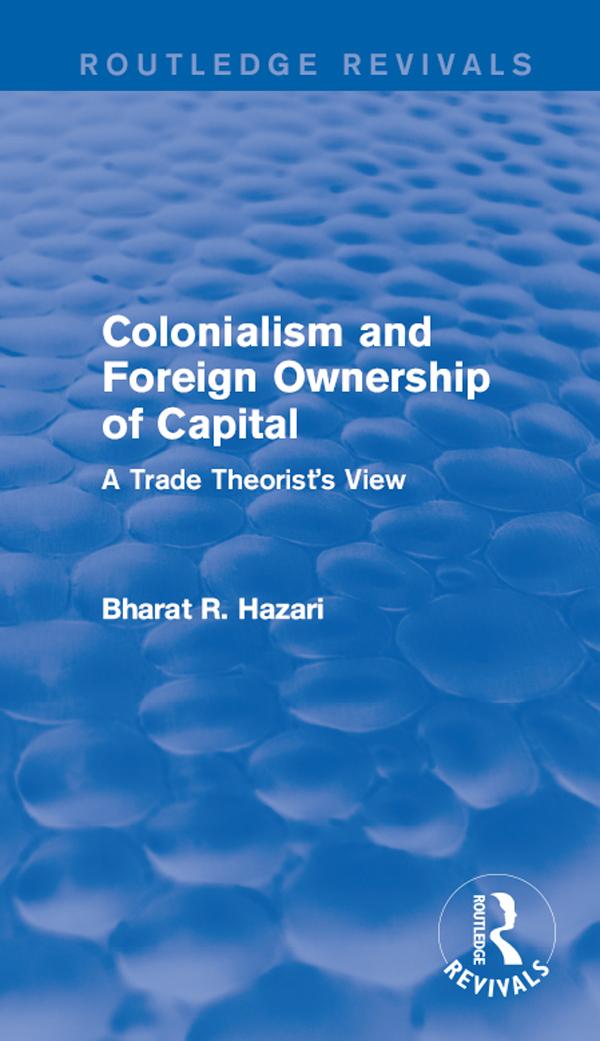
First published in 1982. Foreign control of capital is a major problem for many developing countries and can lead to the exercise of a form of colonial control whereby capital is provided for political rather than economic reasons. This book discusses the implications of this phenomenon for trade theory and the amount of pressure that foreign countries can exert. The opening chapter examines the themes of de-industrialisation, of stagnation after an initial spurt in economic activity, and the premise that inflows of capital do not necessarily generate growth and expansion. These initial discussions are developed in the subsequent chapters where the effects of foreign ownership on the host country’s economy and trade are dealt with fully. This work would be of interest to students of economics and development.
Betal nemt med kort, Klarna, Apple Pay eller Google Pay. Ikke tilfreds? Du har altid 14 dages fortrydelsesret. Læs mere i vores vilkår. Har du spørgsmål, så send os en mail på hello@memmo.org.
Memmo gør det nemmere at studere – uanset hvor du er i verden. Hos os samler du dine kursusbøger og smarte studieværktøjer ét sted: resuméer, quizzer, podcasts og flashcards. Og så er der Ted, din studieven, der svarer på alt, du undrer dig over. Over 50 000 studerende studerer allerede her – bygget til at hjælpe dig med at lære hurtigere og stresse mindre.