
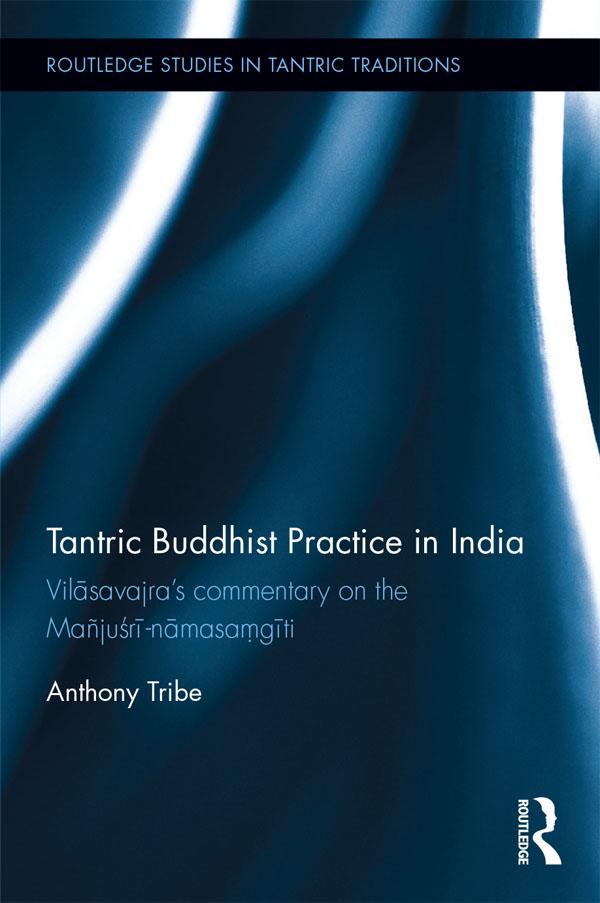
Using a commentary on the influential text, the Mañjuśrī-nāmasaṃgīti, ‘The Chanting of the Names of Mañjuśrī’, this book deals with Buddhist tantric meditation practice and its doctrinal context in early-medieval India. The commentary was written by the 8th-9th century Indian tantric scholar Vilāsavajra, and the book contains a translation of the first five chapters. The translation is extensively annotated, and accompanied by introductions as well as a critical edition of the Sanskrit text based on eight Sanskrit manuscripts and two blockprint editions of the commentary’s Tibetan translation.
The commentary interprets its root text within an elaborate framework of tantric visualisation and meditation that is based on an expanded form of the Buddhist Yoga Tantra mandala, the Vajradhātu-maṇḍala. At its heart is the figure of Mañjuśrī, no longer the familiar bodhisattva of wisdom, but now the embodiment of the awakened non-dual gnosis that underlies all Buddhas as well their activity in the cosmos.
The book contributes to our understanding of the history of Indian tantric Buddhism in a period of significant change and innovation. With its extensively annotated translation and lengthy introductions the book is designed to appeal not only to professional scholars and research students but also to contemporary Buddhists.
Betal nemt med kort, Klarna, Apple Pay eller Google Pay. Ikke tilfreds? Du har altid 14 dages fortrydelsesret. Læs mere i vores vilkår. Har du spørgsmål, så send os en mail på hello@memmo.org.
Memmo gør det nemmere at studere – uanset hvor du er i verden. Hos os samler du dine kursusbøger og smarte studieværktøjer ét sted: resuméer, quizzer, podcasts og flashcards. Og så er der Ted, din studieven, der svarer på alt, du undrer dig over. Over 50 000 studerende studerer allerede her – bygget til at hjælpe dig med at lære hurtigere og stresse mindre.