
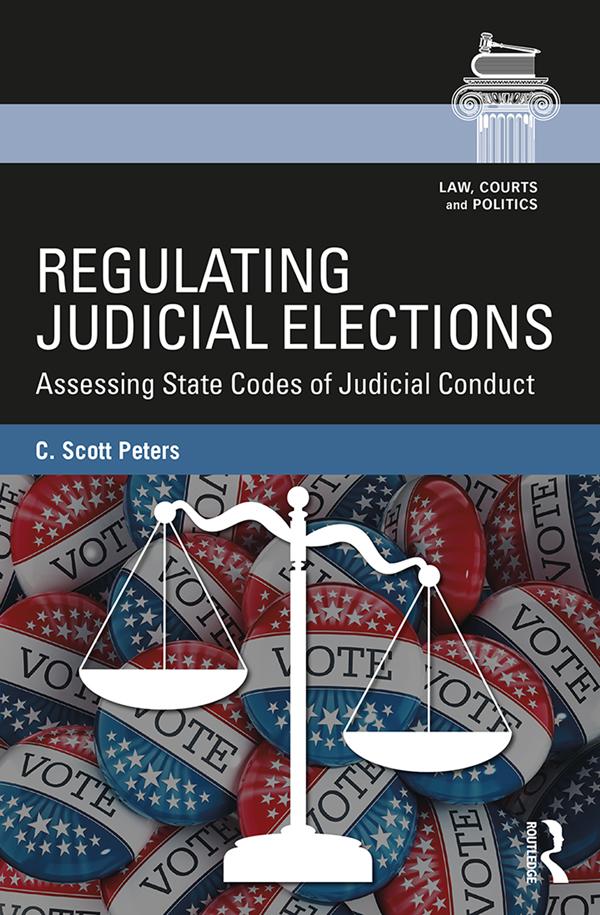
State judicial elections are governed by a unique set of rules that enforce longstanding norms of judicial independence by limiting how judicial candidates campaign. These rules have been a key part of recent debates over judicial elections and have been the subject of several U.S. Supreme Court cases.
Regulating Judicial Elections provides the first accounting of the efficacy and consequences of such rules. C. Scott Peters re-frames debates over judicial elections by shifting away from all-or-nothing claims about threats to judicial independence and focusing instead on the trade-offs inherent in our checks and balances system. In doing so, he is able to examine the costs and benefits of state ethical restrictions. Peters finds that while some parts of state codes of conduct achieve their desired goals, others may backfire and increase the politicization of judicial elections. Moreover, modest gains in the protection of independence come at the expense of the effectiveness of elections as accountability mechanisms. These empirical findings will inform ongoing normative debates about judicial elections.
Betal nemt med kort, Klarna, Apple Pay eller Google Pay. Ikke tilfreds? Du har altid 14 dages fortrydelsesret. Læs mere i vores vilkår. Har du spørgsmål, så send os en mail på hello@memmo.org.
Memmo gør det nemmere at studere – uanset hvor du er i verden. Hos os samler du dine kursusbøger og smarte studieværktøjer ét sted: resuméer, quizzer, podcasts og flashcards. Og så er der Ted, din studieven, der svarer på alt, du undrer dig over. Over 50 000 studerende studerer allerede her – bygget til at hjælpe dig med at lære hurtigere og stresse mindre.