
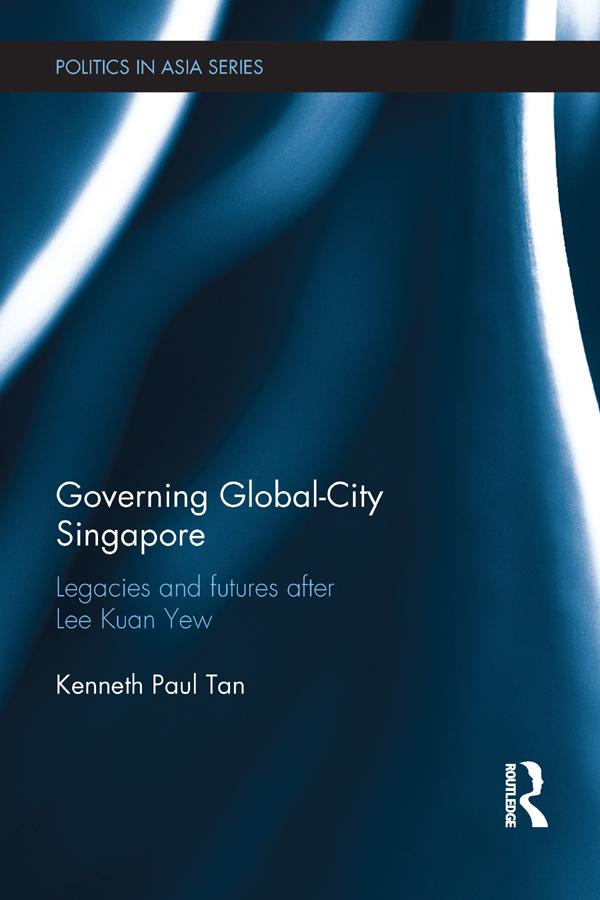
This book provides a detailed analysis of how governance in Singapore has evolved since independence to become what it is today, and what its prospects might be in a post-Lee Kuan Yew future. Firstly, it discusses the question of political leadership, electoral dominance and legislative monopoly in Singapore’s one-party dominant system and the system’s durability. Secondly, it tracks developments in Singapore’s public administration, critically analysing the formation and transformation of meritocracy and pragmatism, two key components of the state ideology. Thirdly, it discusses developments within civil society, focusing in particular on issues related to patriarchy and feminism, hetero-normativity and gay activism, immigration and migrant worker exploitation, and the contest over history and national narratives in academia, the media and the arts. Fourthly, it discusses the PAP government’s efforts to connect with the public, including its national public engagement exercises that can be interpreted as a subtler approach to social and political control. In increasingly complex conditions, the state struggles to maintain its hegemony while securing a pre-eminent position in the global economic order. Tan demonstrates how trends in these four areas converge in ways that signal plausible futures for a post-LKY Singapore.
Betal nemt med kort, Klarna, Apple Pay eller Google Pay. Ikke tilfreds? Du har altid 14 dages fortrydelsesret. Læs mere i vores vilkår. Har du spørgsmål, så send os en mail på hello@memmo.org.
Memmo gør det nemmere at studere – uanset hvor du er i verden. Hos os samler du dine kursusbøger og smarte studieværktøjer ét sted: resuméer, quizzer, podcasts og flashcards. Og så er der Ted, din studieven, der svarer på alt, du undrer dig over. Over 50 000 studerende studerer allerede her – bygget til at hjælpe dig med at lære hurtigere og stresse mindre.