
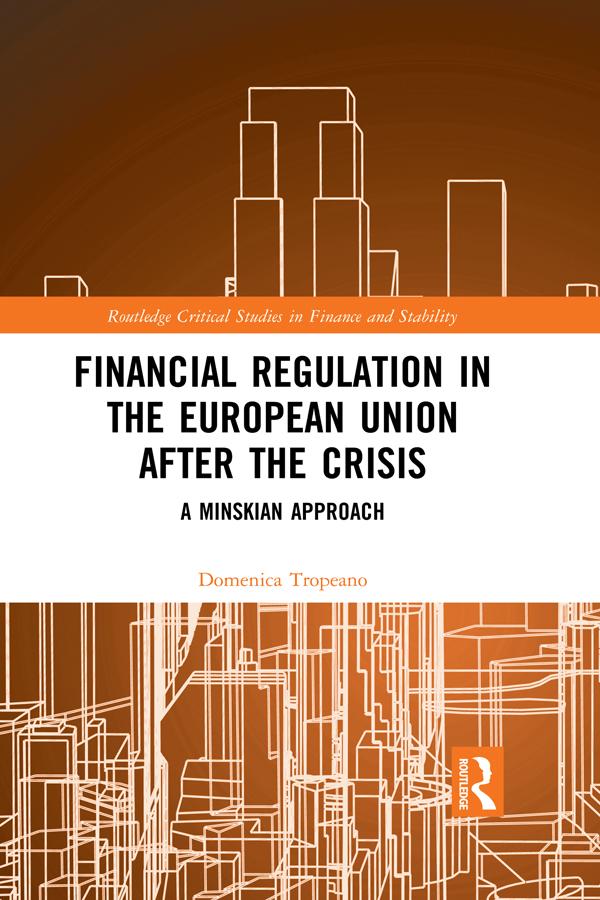
In the wake of the financial crisis, new regulatory measures were introduced which, along with changes in monetary and macroeconomic policy, have transformed the global financial structure. However, this new financial structure displays various fragilities. A new shadow banking system has grown both inside and outside the traditional banks and the divergence between core and periphery countries’ banks has increased further due to both the new regulations and the European Central Bank’s very peculiar interventions.
Following Minsky’s approach, this volume explores the interplay between monetary policy, regulation and institutions in the aftermath of the great financial crisis. Minsky’s insights are used to interpret the recent regulatory changes and consider how they have affected the evolution of banks and financial markets. The unfortunate conclusion is that the changes in financial regulation introduced in various jurisdictions and inspired by the work of the Basel Committee, have not succeeded in thwarting the instability of the economic system. Instead, the mix of policies implemented so far has brought about increased fragility in the financial system. Minksy’s work on financial stability offers alternative solutions which policy-makers need to consider to resolve these issues.
Financial Regulation in the European Union After the Crisis is an important volume for those who study political economy, banking and monetary economics.
Betal nemt med kort, Klarna, Apple Pay eller Google Pay. Ikke tilfreds? Du har altid 14 dages fortrydelsesret. Læs mere i vores vilkår. Har du spørgsmål, så send os en mail på hello@memmo.org.
Memmo gør det nemmere at studere – uanset hvor du er i verden. Hos os samler du dine kursusbøger og smarte studieværktøjer ét sted: resuméer, quizzer, podcasts og flashcards. Og så er der Ted, din studieven, der svarer på alt, du undrer dig over. Over 50 000 studerende studerer allerede her – bygget til at hjælpe dig med at lære hurtigere og stresse mindre.