
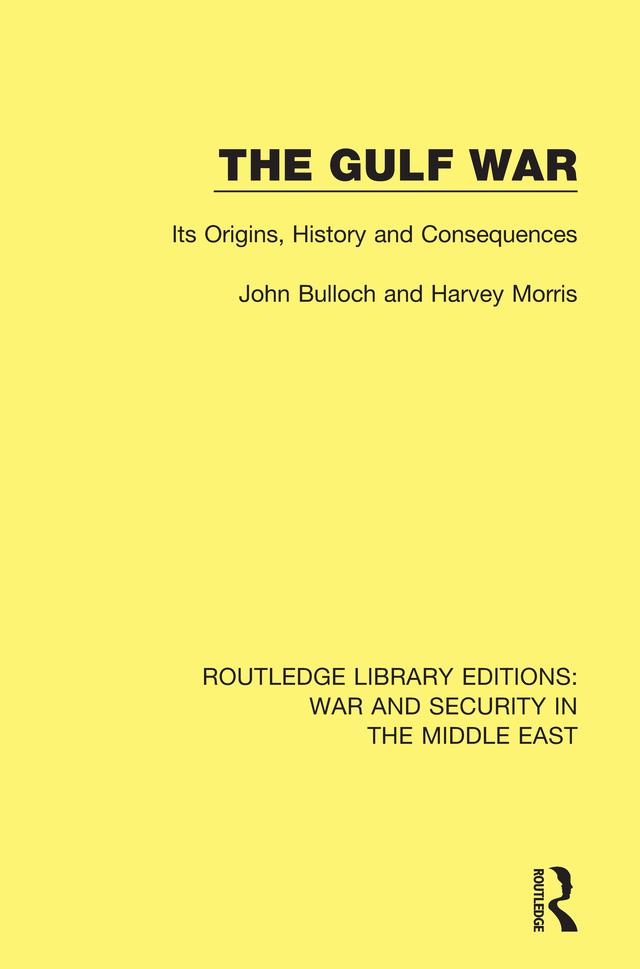
After a million deaths and twice that number injured, after the destruction of much of the infrastructure of Iran and Iraq, disruption of trade throughout the Gulf and the involvement of the USA and USSR, was the Gulf War a pointless exercise, a futile conflict which achieved nothing and left the combatants at the end of it all back in exactly the same position from which they started in 1980? In this book, first published in 1989, the authors argue that the lack of territorial gain was irrelevant: the real advantages won by each side were far more important, intangible though they were. For Iran, the channelling of the energies of her people away from domestic concerns meant the continuation of the Islamic revolution and ensured the stability of the mullahs. In Iraq, the war propped up the increasingly shaky regime of Saddam Hussein. The outside world, especially the superpowers, was terrified of the spread of Muslim fundamentalism, so made no effort to prevent Iraq from trying to halt this spread. But Israel, Saudi Arabia, Syria and the oil states also had vested interests in promoting the continuation of the war.
Betal nemt med kort, Klarna, Apple Pay eller Google Pay. Ikke tilfreds? Du har altid 14 dages fortrydelsesret. Læs mere i vores vilkår. Har du spørgsmål, så send os en mail på hello@memmo.org.
Memmo gør det nemmere at studere – uanset hvor du er i verden. Hos os samler du dine kursusbøger og smarte studieværktøjer ét sted: resuméer, quizzer, podcasts og flashcards. Og så er der Ted, din studieven, der svarer på alt, du undrer dig over. Over 50 000 studerende studerer allerede her – bygget til at hjælpe dig med at lære hurtigere og stresse mindre.