
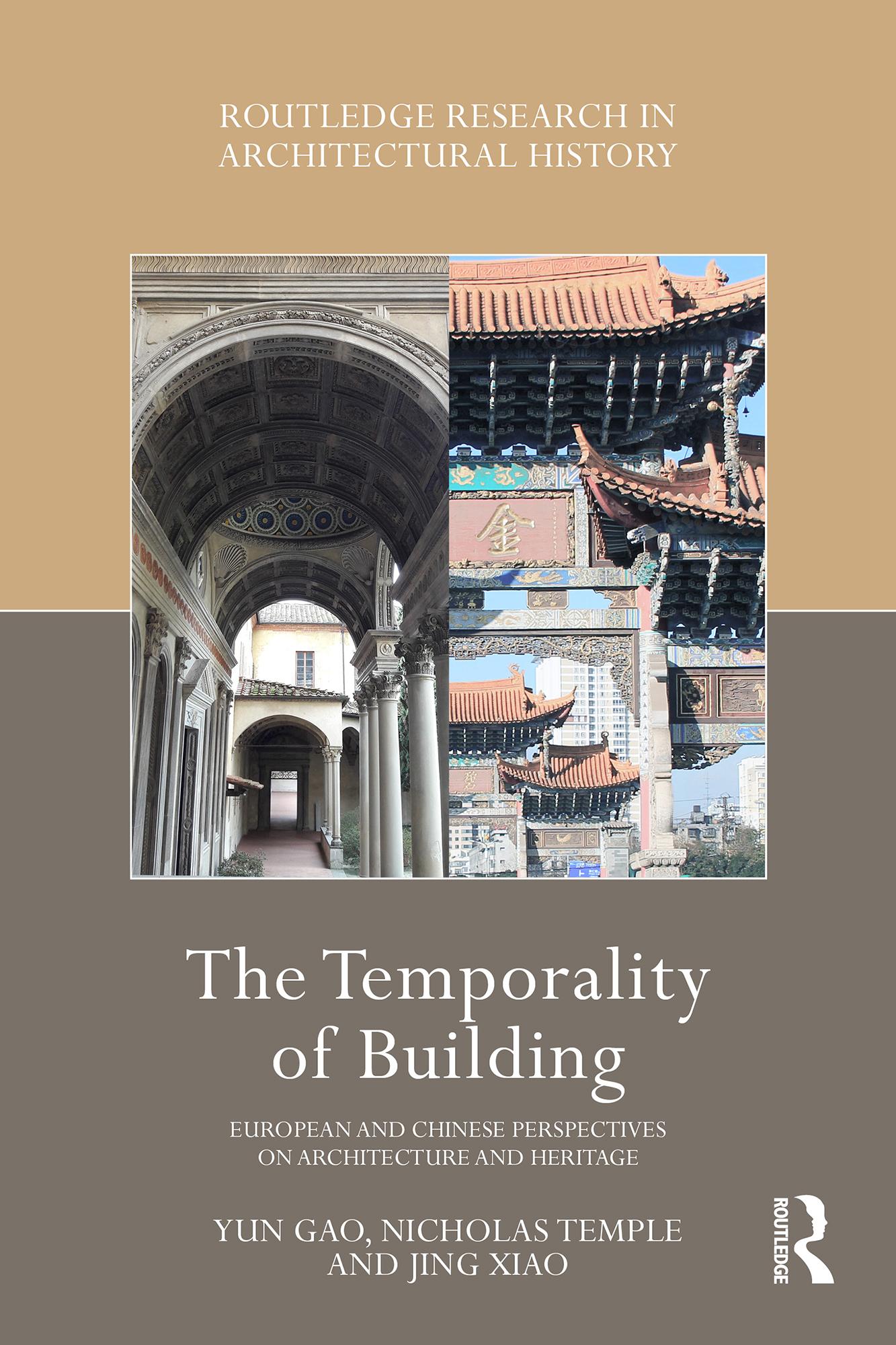
This book examines the role that time plays in the life of buildings, adopting a comparative study of this influence between European and Chinese traditions. Whilst issues of time in architecture have attracted increasing interest by academics in the West, challenging the dominant modernist precepts of space, there is little understanding of the subject in China and how these compare to historical and contemporary perspectives in Europe. A guiding premise of the investigation is that notions of building time require insight into how cultural habits commingle with natural rhythms, or what David Leatherbarrow calls “concurrency”.
Rather than examining specific buildings, the first three chapters apply three key themes (language, ritual and heritage) as cultural lenses to reveal differences and similarities between the two traditions. Through these lenses, buildings, interiors and their exterior spaces (churches/cathedrals, temples, palaces, gardens and courtyard houses) are explored to demonstrate how building time involves particular situations/settings and their correlating relationships to past traditions. In the final chapter we consider notions of time in the context of contemporary buildings in Europe and China, drawing on the earlier historical investigations and addressing globalising influences.
This book would be of interest to architects, architectural theorists, historians, philosophers, sociologists and anthropologists.
Betal nemt med kort, Klarna, Apple Pay eller Google Pay. Ikke tilfreds? Du har altid 14 dages fortrydelsesret. Læs mere i vores vilkår. Har du spørgsmål, så send os en mail på hello@memmo.org.
Memmo gør det nemmere at studere – uanset hvor du er i verden. Hos os samler du dine kursusbøger og smarte studieværktøjer ét sted: resuméer, quizzer, podcasts og flashcards. Og så er der Ted, din studieven, der svarer på alt, du undrer dig over. Over 50 000 studerende studerer allerede her – bygget til at hjælpe dig med at lære hurtigere og stresse mindre.