
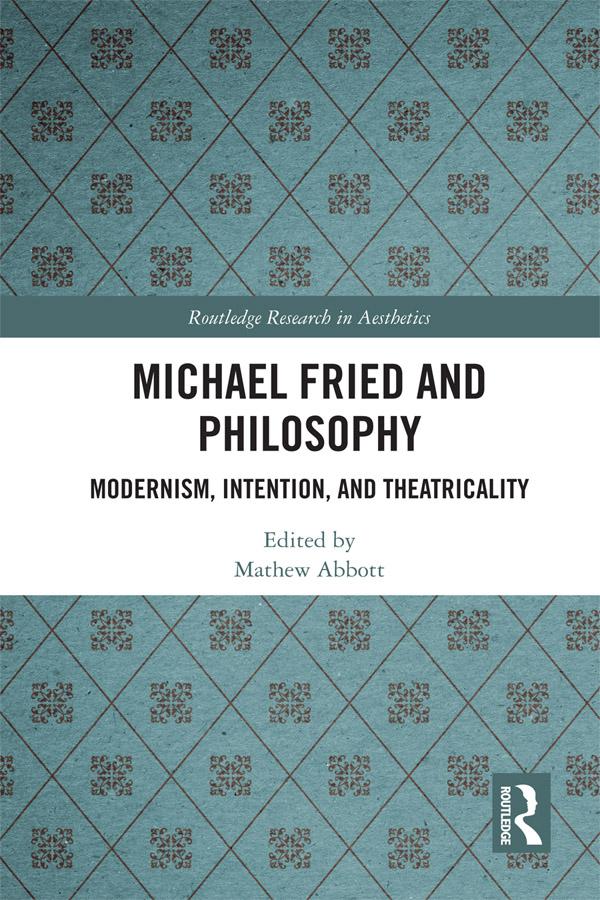
This volume brings philosophers, art historians, intellectual historians, and literary scholars together to argue for the philosophical significance of Michael Fried’s art history and criticism. It demonstrates that Fried’s work on modernism, artistic intention, the ontology of art, theatricality, and anti-theatricality can throw new light on problems in and beyond philosophical aesthetics. Featuring an essay by Fried and articles from world-leading scholars, this collection engages with philosophical themes from Fried’s texts, and clarifies the relevance to his work of philosophers such as Ludwig Wittgenstein, Stanley Cavell, Morris Weitz, Elizabeth Anscombe, Arthur Danto, George Dickie, Immanuel Kant, Friedrich Schiller, G. W. F. Hegel, Arthur Schopenhauer, Friedrich Nietzsche, Denis Diderot, Maurice Merleau-Ponty, Roland Barthes, Jacques Rancière, and Søren Kierkegaard. As it makes a case for the importance of Fried for philosophy, this volume contributes to current debates in analytic and continental aesthetics, philosophy of action, philosophy of history, political philosophy, modernism studies, literary studies, and art theory.
Betal nemt med kort, Klarna, Apple Pay eller Google Pay. Ikke tilfreds? Du har altid 14 dages fortrydelsesret. Læs mere i vores vilkår. Har du spørgsmål, så send os en mail på hello@memmo.org.
Memmo gør det nemmere at studere – uanset hvor du er i verden. Hos os samler du dine kursusbøger og smarte studieværktøjer ét sted: resuméer, quizzer, podcasts og flashcards. Og så er der Ted, din studieven, der svarer på alt, du undrer dig over. Over 50 000 studerende studerer allerede her – bygget til at hjælpe dig med at lære hurtigere og stresse mindre.