
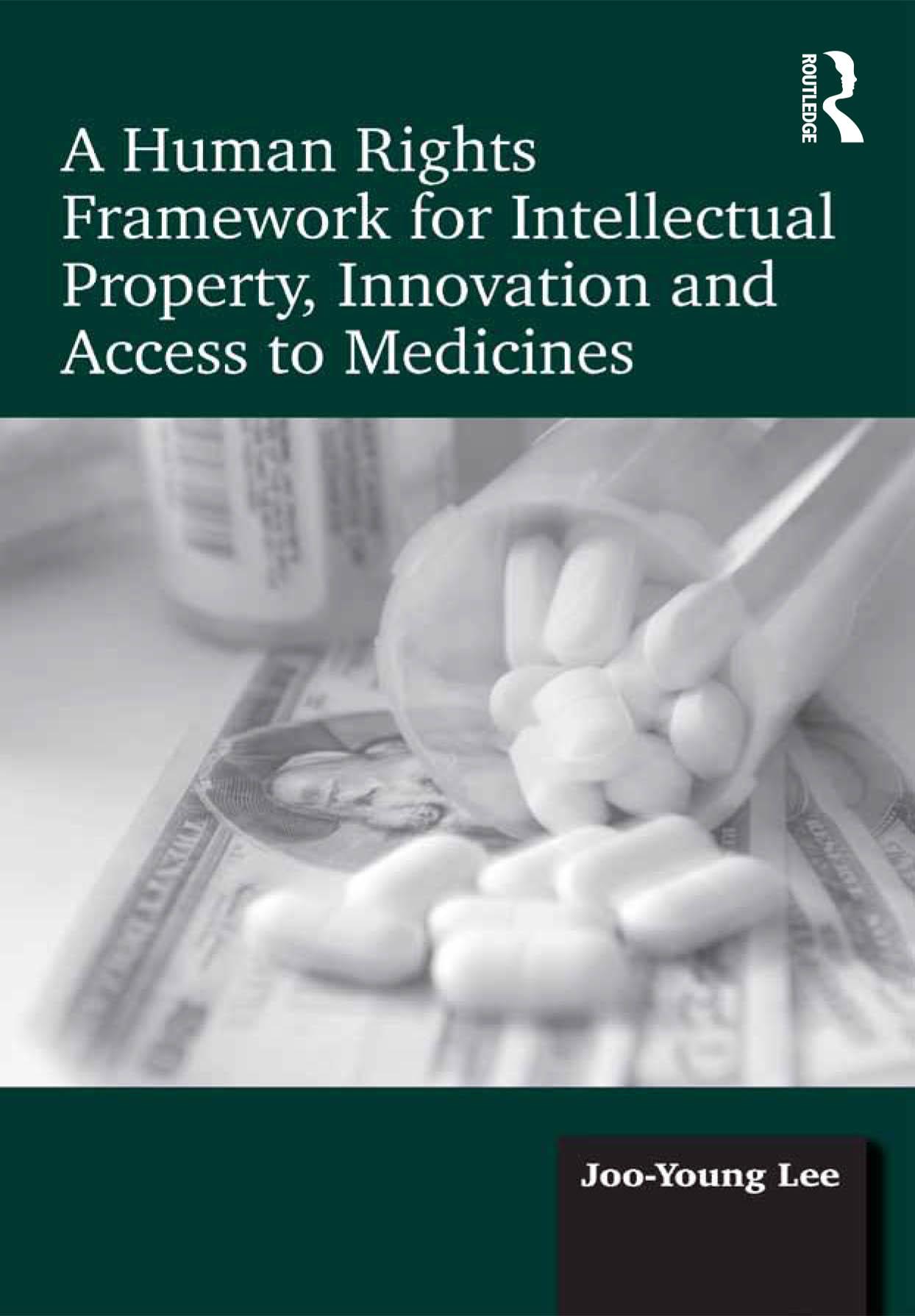
This book examines the relationship between intellectual property in pharmaceuticals and access to medicines from a human rights perspective, with a view to contributing to the development of a human rights framework that can guide States in enacting and implementing intellectual property law and policy. The study primarily explores whether conflicts between patents and human rights in the context of access to medicines are inevitable, or whether patents can be made to serve human rights. What could be a normative framework that human rights might provide for patents and innovation? Joo-Young Lee argues that it is necessary to have a deepened understanding of each of the two sets of norms that govern this issue, that is, patent law and international human rights law. The chapters investigate the relevant dimensions of patent law, and analyse particular human rights bearing upon the issue of intellectual property and access to medicines. This study will be of great interest to academic specialists, practitioners or professionals in the fields of human rights, trade, and intellectual property, as well as policy makers, activists, and health professionals across the world working in intellectual property and human rights.
Betal nemt med kort, Klarna, Apple Pay eller Google Pay. Ikke tilfreds? Du har altid 14 dages fortrydelsesret. Læs mere i vores vilkår. Har du spørgsmål, så send os en mail på hello@memmo.org.
Memmo gør det nemmere at studere – uanset hvor du er i verden. Hos os samler du dine kursusbøger og smarte studieværktøjer ét sted: resuméer, quizzer, podcasts og flashcards. Og så er der Ted, din studieven, der svarer på alt, du undrer dig over. Over 50 000 studerende studerer allerede her – bygget til at hjælpe dig med at lære hurtigere og stresse mindre.
Du kan måske også lide
Køb bogen0