
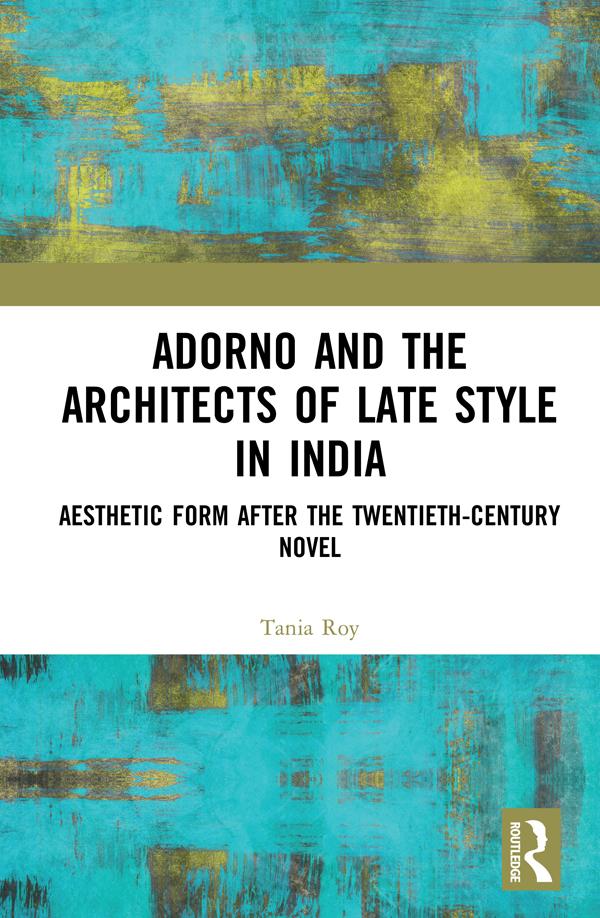
In the postcolonial world, the claim to an emancipated national culture was bound to its aesthetic correlate, the unfolding time and experiments of the twentieth-century novel. Today, the constructs of both novel and a progressivist national project function, in all their closures, within global scales of economic disparity and violent exclusion.
What is the fate of a literary canon when it is no longer capable of delineating a future – or otherwise, is bound to reproduce the failures of the past within its own inscriptions? How do we experience our current "globalist" moment, when lived inequities of gender, labour and ethnicity emerge in a text’s inability to speak on time? When does artistic or literary failure become the measure of a work's accomplishment? And what sort of liberation is envisioned by works that refuse the imperatives of "progress" and "independence" – which embrace the appearance of obsolescence by rejecting values of artistic freedom, originality and innovation? These are some of the provocations that arise from T.W. Adorno's idea of late style for our own conjuncture – a properly postcolonial context, in which every conceptual or expressive engagement is articulated through an awareness of eroded national promise.
Examining works by Rabindranath Tagore, Mulk Raj Anand, Vikram Seth and the photography of Dayanita Singh, Tania Roy examines the delayed claims of literary and artistic modernity in India through Adorno’s category of late-style. In striking readings of Adorno and his interlocuters, the book extends a poetics of lateness toward a speculative history of the twentieth-century novel in India. Comprised of critically neglected selections from the oeuvres of canonical writers, Adorno and the Architects of Late Style in India proposes that under conditions of advanced capitalism, logics of redundancy overtake the novel’s foundational reference point in the nation to produce altered frames of thought and sensibility – and therein, a reader who might encounter, anew, the figures of an unfulfilled twentieth century.
Betal nemt med kort, Klarna, Apple Pay eller Google Pay. Ikke tilfreds? Du har altid 14 dages fortrydelsesret. Læs mere i vores vilkår. Har du spørgsmål, så send os en mail på hello@memmo.org.
Memmo gør det nemmere at studere – uanset hvor du er i verden. Hos os samler du dine kursusbøger og smarte studieværktøjer ét sted: resuméer, quizzer, podcasts og flashcards. Og så er der Ted, din studieven, der svarer på alt, du undrer dig over. Over 50 000 studerende studerer allerede her – bygget til at hjælpe dig med at lære hurtigere og stresse mindre.