
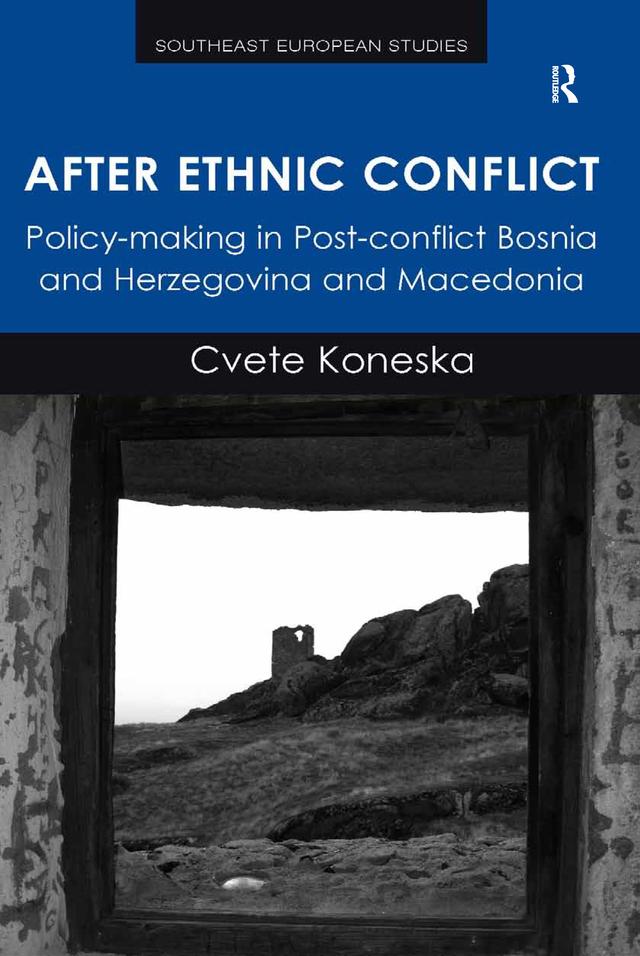
After Ethnic Conflict: Policy-making in Post-conflict Bosnia and Herzegovina and Macedonia investigates how sensitive policy issues can be resolved in the aftermath of war by investigating how political elites interact and make decisions in ethnically divided societies. Focussing on the interactions between political elites and attempts to reach agreement across ethnic lines in Bosnia and Macedonia the book examines the impact that institutional factors can have on political actors and the decisions they make. Examining domestic factors and external influence in politics, Cvete Koneska identifies four key drivers of post-conflict cooperation: cross-cutting identities, minority veto powers, territorial autonomy, and informal practices to explain inter-ethnic political accommodation. By looking beyond the immediate post-conflict landscape, created by foreign peace negotiators and aid missions, to the internal political process she shows the real reasons political actors cooperate and how competing ethnic tensions are reconciled following ethnic conflict. Delving deeper into specific policy areas to compare successful and unsuccessful attempts at ethnic accommodation this book explores the factors behind the different policy outcomes that sustain or undermine peace and ethnic cooperation in ethnically divided societies.
Betal nemt med kort, Klarna, Apple Pay eller Google Pay. Ikke tilfreds? Du har altid 14 dages fortrydelsesret. Læs mere i vores vilkår. Har du spørgsmål, så send os en mail på hello@memmo.org.
Memmo gør det nemmere at studere – uanset hvor du er i verden. Hos os samler du dine kursusbøger og smarte studieværktøjer ét sted: resuméer, quizzer, podcasts og flashcards. Og så er der Ted, din studieven, der svarer på alt, du undrer dig over. Over 50 000 studerende studerer allerede her – bygget til at hjælpe dig med at lære hurtigere og stresse mindre.
Du kan måske også lide
Køb bogen0