
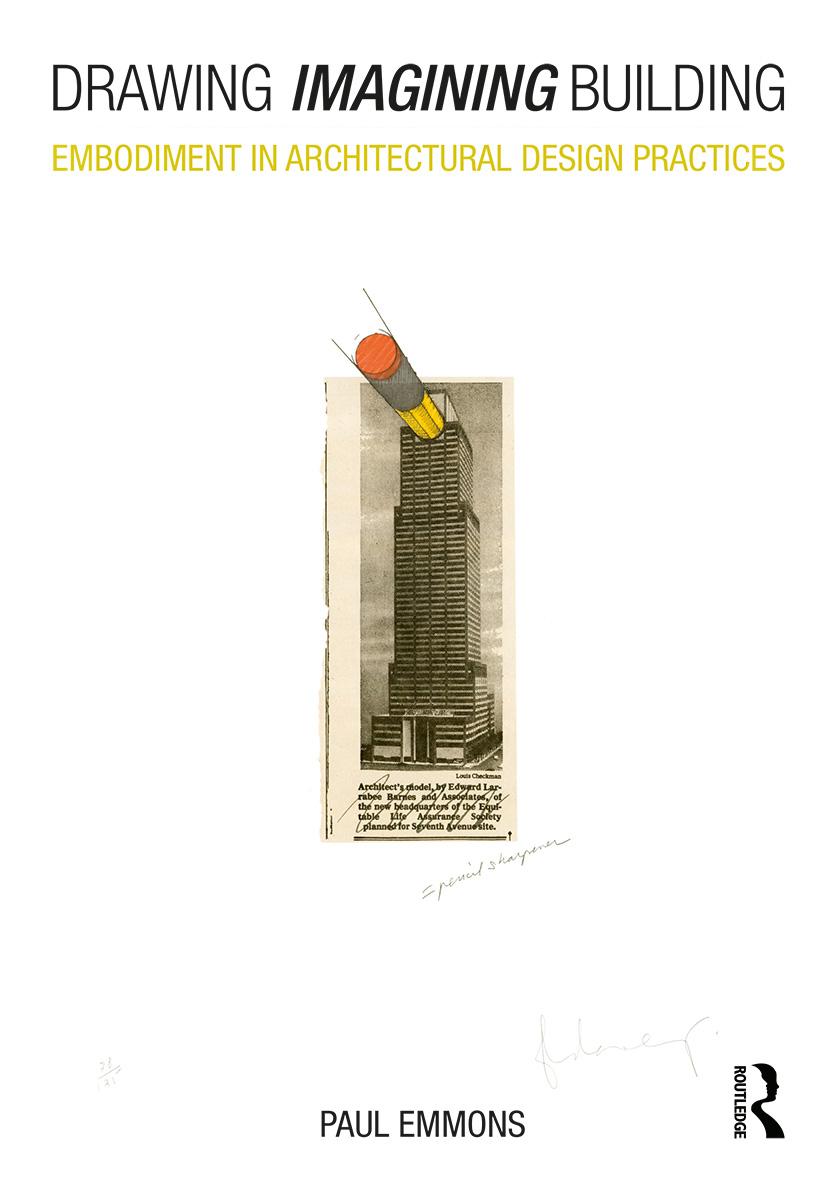
Drawing Imagining Building focuses on the history of hand-drawing practices to capture some of the most crucial and overlooked parts of the process. Using 80 black and white images to illustrate the examples, it examines architectural drawing practices to elucidate the ways drawing advances the architect’s imagination.
Emmons considers drawing practices in the Renaissance and up to the first half of the twentieth century. Combining systematic analysis across time with historical explication presents the development of hand-drawing, while also grounding early modern practices in their historical milieu. Each of the illustrated chapters considers formative aspects of architectural drawing practice, such as upright elevations, flowing lines and occult lines, and drawing scales to identify their roots in an embodied approach to show how hand-drawing contributes to the architect’s productive imagination. By documenting some of the ways of thinking through practices of architectural handdrawing, it describes how practices can enrich the ethical imagination of the architect.
This book would be beneficial for academics, practitioners, and students of architecture, particularly those who are interested in the history and significance of hand-drawing and technical drawing.
Betal nemt med kort, Klarna, Apple Pay eller Google Pay. Ikke tilfreds? Du har altid 14 dages fortrydelsesret. Læs mere i vores vilkår. Har du spørgsmål, så send os en mail på hello@memmo.org.
Memmo gør det nemmere at studere – uanset hvor du er i verden. Hos os samler du dine kursusbøger og smarte studieværktøjer ét sted: resuméer, quizzer, podcasts og flashcards. Og så er der Ted, din studieven, der svarer på alt, du undrer dig over. Over 50 000 studerende studerer allerede her – bygget til at hjælpe dig med at lære hurtigere og stresse mindre.