
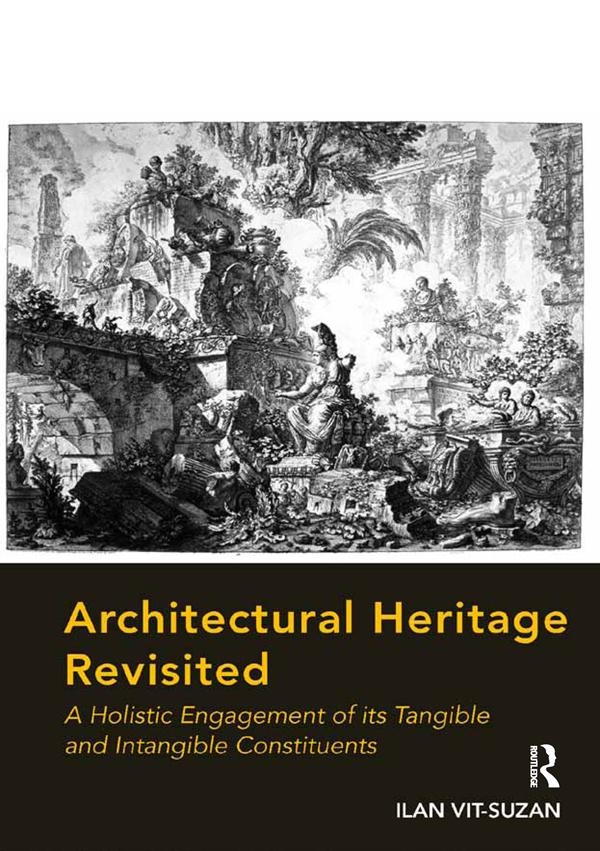
By improving our understanding of how the tangible and intangible dimensions of heritage are correlated, we could develop a relationship with heritage that goes beyond the mere act of conservation. This book argues that we need to recognize the historic monument as a tangible aspect of a holistic expression of culture that is rooted in specific spatio-temporal conditions. However, since the latter are constantly changing, it is vital to identify an implicit contradiction with the goals of conservation. As the intangible dimensions are more dynamic, driven by the transmission, reception, and advancement of knowledge, the reliance of the prevailing treatment of heritage today, conservation, ossifies this relationship. By examining three major heritage monuments - the Pantheon, Teotihuacan's Sun Pyramid and Alhambra - the book shows how these sites are the product of multiple strategies and unforeseen agents, accumulated through history. It emphasizes how these historical trends need to be better understood in order to attain a more 'organic' relationship with heritage and offers some recommendations that should be analyzed in participative processes of deliberation: the Pantheon's continuity could be extended; the Pyramid's loss, accepted; and Alhambra's exclusion, reversed. In this way, the book invites people to engage heritage from a historical understanding that is open to critical reassessment, dialogue, and cooperation.
Betal nemt med kort, Klarna, Apple Pay eller Google Pay. Ikke tilfreds? Du har altid 14 dages fortrydelsesret. Læs mere i vores vilkår. Har du spørgsmål, så send os en mail på hello@memmo.org.
Memmo gør det nemmere at studere – uanset hvor du er i verden. Hos os samler du dine kursusbøger og smarte studieværktøjer ét sted: resuméer, quizzer, podcasts og flashcards. Og så er der Ted, din studieven, der svarer på alt, du undrer dig over. Over 50 000 studerende studerer allerede her – bygget til at hjælpe dig med at lære hurtigere og stresse mindre.
Du kan måske også lide
Køb bogen0