
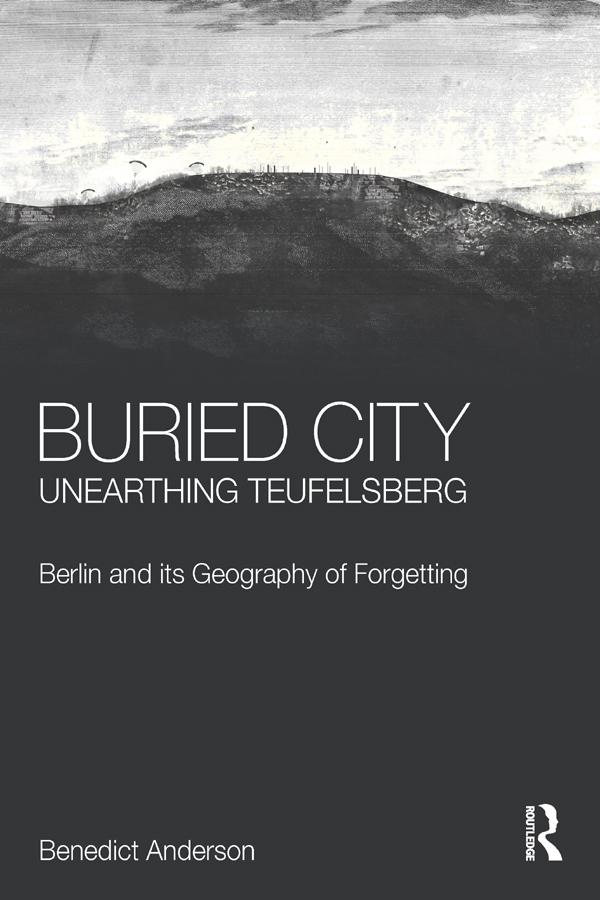
Cities are built over the remnants of their past buried beneath their present. We build on what has been built before, whether over foundations formalising previous permanency or over the temporal occupations of ground. But what happens when you shift a city - when you dislodge its occupation of ground towards a new ground, bury it and forget it?
Focusing on Berlin’s destruction during World War II and its reconstruction after the end of the war, this book offers a rethinking of how the practices of destruction and burial combine to reform the city through geography and how burying a city is intricately tied to forgetting destruction, ruination and trauma. Created from 25 million cubic meters of rubble produced during World War II, Teufelsberg (Devil's Mountain) is the exemplar of the destroyed city. Its critical journey is chronicled in combination with Berlin’s seven other rubble hills, and their connections to constructing forgetting through burial. Furthermore, the book investigates Berlin’s sublime relation to Albert Speer’s urban vision to rival the ancient cities of Rome and Athens through their now shared geographies of seven hills. Finally, there is a central focus on the role of the citizens who cleared Berlin’s streets of rubble, and the subsequent human relationships between people and ruins.
This book is valuable reading for those interested in Architectural Theory, Urban Geography, Modern History and Urban Design.
Betal nemt med kort, Klarna, Apple Pay eller Google Pay. Ikke tilfreds? Du har altid 14 dages fortrydelsesret. Læs mere i vores vilkår. Har du spørgsmål, så send os en mail på hello@memmo.org.
Memmo gør det nemmere at studere – uanset hvor du er i verden. Hos os samler du dine kursusbøger og smarte studieværktøjer ét sted: resuméer, quizzer, podcasts og flashcards. Og så er der Ted, din studieven, der svarer på alt, du undrer dig over. Over 50 000 studerende studerer allerede her – bygget til at hjælpe dig med at lære hurtigere og stresse mindre.