
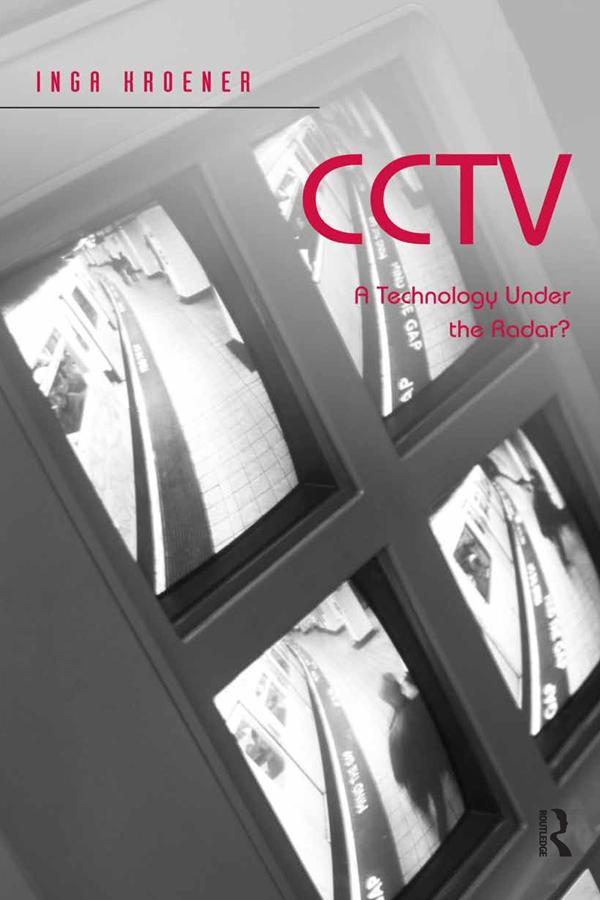
Central state and non-covert surveillance began in earnest at the start of the twentieth century. By the start of the twenty-first century, the UK was one of the most surveilled societies on earth. This groundbreaking volume by Inga Kroener analyses the particular combination of factors that have created this surveillance state. Kroener argues against the inevitability of the rise of CCTV that is so often found in this literature, to map out the early history of CCTV, tracing its development from a tool for education, safety and transport during the 1950s, to one of politics in the 1970s and 1980s, to eventually become a tool of surveillance during the 1990s. Within this analysis, the complex role of the public in 'allowing' the widespread and rapid dissemination of CCTV is discussed and the representation of CCTV in the media is also studied. This volume will be of interest to all scholars working in the fields of surveillance studies; science, technology and society departments; and social historians more generally.
Betal nemt med kort, Klarna, Apple Pay eller Google Pay. Ikke tilfreds? Du har altid 14 dages fortrydelsesret. Læs mere i vores vilkår. Har du spørgsmål, så send os en mail på hello@memmo.org.
Memmo gør det nemmere at studere – uanset hvor du er i verden. Hos os samler du dine kursusbøger og smarte studieværktøjer ét sted: resuméer, quizzer, podcasts og flashcards. Og så er der Ted, din studieven, der svarer på alt, du undrer dig over. Over 50 000 studerende studerer allerede her – bygget til at hjælpe dig med at lære hurtigere og stresse mindre.
Du kan måske også lide
Køb bogen0